Olympus cellSens: Advanced Imaging Software for Modern Microscopy

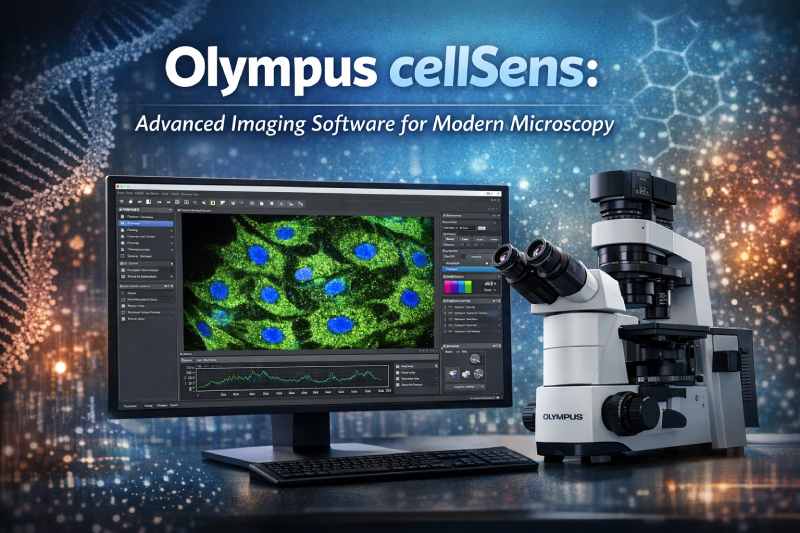
Olympus cellSens is a powerful and flexible microscopy imaging software platform designed to support modern life science research. Built to handle everything from basic image capture to advanced multidimensional experiments, olympus cellsens has become a trusted solution in research laboratories, universities, and industrial facilities where accuracy, efficiency, and reproducibility matter.
Table of Contents
ToggleWhat Is Olympus cellSens?
Olympus cellSens is an integrated microscopy software environment that supports image acquisition, visualization, processing, analysis, and documentation. It is designed to work seamlessly with digital microscopes and cameras, enabling users to manage the full imaging lifecycle from experiment setup to final data export.
At its core, olympus cellsens is built around flexibility. Researchers can tailor the interface, toolsets, and workflows to match specific experimental needs, whether that involves simple brightfield imaging or complex time-lapse fluorescence experiments.
Core Philosophy Behind Olympus cellSens
Designed for Real Laboratory Workflows
One of the defining strengths of olympus cellsens is that it reflects how scientists actually work. Rather than forcing users into rigid processes, the software adapts to different imaging styles and research goals. This makes it suitable for:
-
Daily routine imaging tasks
-
Long-term live-cell experiments
-
Quantitative image analysis projects
-
Teaching and training environments
Balancing Simplicity and Power
Olympus cellSens manages to remain approachable for new users while offering deep functionality for advanced research. This balance is achieved through modular software editions and customizable interfaces, allowing laboratories to scale their capabilities over time.
Key Editions of Olympus cellSens
Olympus cellSens is available in multiple editions, each designed to meet different levels of research complexity.
cellSens Entry
This edition focuses on fundamental imaging tasks. It is ideal for laboratories that require reliable image capture and documentation without advanced automation.
Key capabilities include:
-
Live image display
-
Still image acquisition
-
Basic measurements and annotations
-
Image export and documentation tools
cellSens Standard
The Standard edition expands on Entry by adding more advanced imaging and control features. It supports a broader range of experiments while maintaining ease of use.
Notable enhancements include:
-
Time-lapse imaging
-
Multi-channel fluorescence capture
-
Motorized hardware control
-
Enhanced image processing tools
cellSens Dimension
cellSens Dimension is the most advanced edition, designed for complex and automated research workflows.
Advanced features include:
-
Multi-position and multi-dimensional imaging
-
Z-stack acquisition
-
Automated experiment sequencing
-
Advanced quantitative analysis
-
Object tracking and segmentation
This edition is commonly used in research environments where large datasets and automation are essential.
Image Acquisition Capabilities
High-Quality Image Capture
Olympus cellSens supports high-resolution image acquisition across multiple microscopy techniques. Whether working with brightfield, phase contrast, fluorescence, or specialized imaging modes, the software ensures consistent image quality.
Multidimensional Imaging
Modern biological research often requires more than static images. Olympus cellSens supports:
-
Time-lapse imaging for observing dynamic processes
-
Z-stack acquisition for three-dimensional reconstruction
-
Multi-channel imaging for fluorescence experiments
These capabilities allow researchers to capture complex biological events with precision and clarity.
Image Processing and Enhancement Tools
Non-Destructive Image Processing
Olympus cellSens offers a wide range of image processing tools that enhance visibility without altering original data. Adjustments such as contrast optimization, background correction, and noise reduction can be applied while preserving raw images for reference.
Standardized Image Enhancement
The software allows researchers to apply consistent processing settings across multiple images, improving reproducibility and ensuring fair comparisons between datasets.
Quantitative Image Analysis
Measurement and Counting Tools
Olympus cellSens includes built-in measurement tools for distance, area, intensity, and object counting. These tools are commonly used for tasks such as:
-
Cell counting
-
Colony size measurement
-
Fluorescence intensity analysis
-
Morphological assessment
Advanced Object Detection
More advanced editions of olympus cellsens support automated object detection and segmentation, enabling faster and more consistent analysis of large datasets.
Automation and Experiment Control
Automated Imaging Workflows
Automation is a major strength of olympus cellsens, particularly in higher-end editions. Researchers can define imaging protocols that automatically control hardware components such as stages, focus drives, and illumination systems.
Reproducible Experiment Design
By saving experiment settings and protocols, olympus cellsens helps ensure reproducibility across multiple imaging sessions, which is critical for reliable scientific research.
User Interface and Customization
Personalized Workspace Layouts
Olympus cellSens allows users to customize toolbars, panels, and shortcuts. This personalization helps researchers work more efficiently by keeping essential tools easily accessible.
Beginner-Friendly Learning Curve
Despite its advanced capabilities, olympus cellsens is designed to be intuitive. Clear menus, logical workflows, and visual feedback reduce training time and make the software accessible to new users.
Data Management and Export
Secure Image Storage
Olympus cellSens supports structured data storage, making it easier to manage large image collections and maintain organized research records.
Flexible Export Options
Images and datasets can be exported in widely accepted scientific formats, ensuring compatibility with external analysis software, publications, and presentations.
Common Applications of Olympus cellSens
Olympus cellSens is widely used across multiple research fields, including:
-
Cell biology and molecular biology
-
Neuroscience research
-
Developmental biology
-
Materials science
-
Industrial inspection and quality control
Its versatility allows it to adapt to both biological and non-biological imaging needs.
Benefits of Using Olympus cellSens
Improved Research Efficiency
By combining image acquisition, processing, and analysis in a single platform, olympus cellsens reduces workflow complexity and saves time.
High Reproducibility
Standardized workflows and automation features help ensure consistent results across experiments.
Scalability
Laboratories can start with a basic edition and upgrade as research needs grow, protecting long-term investment.
(FAQs)
What is olympus cellsens mainly used for?
Olympus cellSens is primarily used for microscopy image acquisition, processing, and quantitative analysis in life science and industrial research settings.
Is olympus cellsens suitable for beginners?
Yes, olympus cellsens is designed with an intuitive interface that makes it accessible for beginners while still offering advanced tools for experienced researchers.
Can olympus cellsens handle time-lapse experiments?
Olympus cellSens supports time-lapse imaging, allowing researchers to observe dynamic biological processes over extended periods.
Does olympus cellsens support automated imaging?
Advanced editions of olympus cellsens include automation features for multi-position, multi-dimensional, and long-term experiments.
Is olympus cellsens used for clinical diagnosis?
Olympus cellSens is intended for research and laboratory use and is not designed for clinical diagnostic purposes.
Conclusion
Olympus cellSens stands out as a comprehensive microscopy imaging software solution that meets the demands of modern research environments. Its ability to combine high-quality image acquisition, advanced processing, quantitative analysis, and automation within a single platform makes it a valuable tool for laboratories seeking accuracy, efficiency, and reproducibility. Whether used for routine imaging or complex multidimensional experiments, olympus cellsens provides a flexible and future-ready foundation for scientific discovery.