Meleth Nin: The Meaning, Origins, and Cultural Beauty of an Elvish Expression

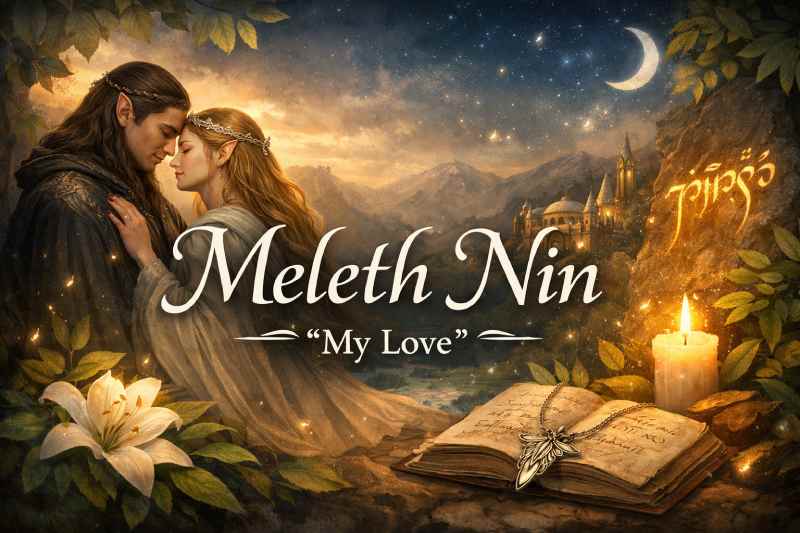
The phrase meleth nin carries a gentle yet powerful emotional weight that has captivated language lovers, fantasy readers, and romantics around the world. Simple in structure but rich in feeling, meleth nin means “my love” in Sindarin, one of the Elvish languages created by J. R. R. Tolkien.
Table of Contents
ToggleUnderstanding the Meaning of Meleth Nin
At its most basic level, meleth nin translates to “my love.” While that translation may appear simple, the emotional meaning behind it is layered and profound. Unlike casual phrases used in everyday conversation, meleth nin carries a sense of intention and depth that feels personal and sincere.
Breaking Down the Words
To understand the phrase fully, it helps to look at each word individually.
Meleth refers to love, but not in a fleeting or superficial sense. It represents emotional attachment, care, and devotion. This is love that grows, endures, and carries meaning over time.
Nin, sometimes written as nîn, means “my.” In Sindarin, this possessive form conveys closeness and personal connection rather than ownership.
Together, meleth nin expresses a form of love that is deeply felt, respectful, and enduring.
Sindarin and Its Emotional Nature
What Is Sindarin?
Sindarin is one of the primary Elvish languages developed by Tolkien for the peoples of Middle-earth. It is known for its musical quality, flowing sounds, and natural rhythm. Tolkien designed Sindarin to feel like a living language, one that could realistically carry emotion, history, and culture.
Unlike many constructed languages, Sindarin feels organic. Phrases like meleth nin sound gentle and sincere, making them especially suitable for expressions of affection.
Why Sindarin Feels So Expressive
Sindarin favors soft consonants and smooth transitions between sounds. This gives it a lyrical tone that naturally lends itself to emotional expression. When spoken aloud, meleth nin feels warm and intimate, which is one reason it has become so popular beyond literary circles.
Love and Language in Tolkien’s World
Love as a Central Theme
Love plays a central role throughout Tolkien’s writings. Romantic love, familial love, friendship, loyalty, and sacrifice all shape the journeys of his characters. Even when love is not spoken directly, it is often the force that drives decisions and defines character arcs.
Although meleth nin itself does not frequently appear in dialogue, the concept behind it fits seamlessly into the emotional landscape of Middle-earth. Elvish culture places great value on memory, connection, and lasting bonds, making meleth nin a phrase that reflects those ideals.
Elvish Expressions of Affection
Elves are portrayed as thoughtful, emotionally deep, and long-lived beings. Their expressions of love are rarely impulsive. When affection is expressed, it carries weight and meaning. Meleth nin captures this idea perfectly, suggesting devotion that is steady rather than fleeting.
The Modern Appeal of Meleth Nin
A Poetic Alternative to Common Phrases
In modern communication, expressions of love are often shortened, repeated, and stripped of emotional impact. Meleth nin offers something different. It feels deliberate and poetic, even to those unfamiliar with its origins.
Using meleth nin instead of a common phrase adds a sense of intimacy and uniqueness, making the message feel special rather than routine.
Use in Personal Relationships
Meleth nin is often used between partners as a term of endearment. It appears in handwritten notes, anniversary messages, wedding vows, and private conversations. Because it is not part of everyday language, it feels personal, almost like a shared secret between two people.
Meleth Nin in Art and Personal Expression
Tattoos and Symbolic Meaning
One of the most popular modern uses of meleth nin is in tattoos. The phrase’s short length and elegant sound make it ideal for minimalist designs. People choose meleth nin to symbolize deep emotional bonds, lifelong commitment, or meaningful relationships.
It is often written in flowing script or Elvish-inspired lettering, sometimes accompanied by subtle imagery such as leaves, stars, or nature-inspired symbols.
Jewelry and Decorative Art
Meleth nin is also commonly engraved on rings, pendants, bracelets, and other keepsakes. In this form, it becomes a physical reminder of affection and connection. Because of its literary roots, it feels timeless rather than trendy.
Pronunciation and Writing Style
How Meleth Nin Is Pronounced
A commonly accepted pronunciation of meleth nin is:
MEH-leth neen
The pronunciation is soft and flowing, without sharp emphasis. This gentle sound contributes to the phrase’s romantic tone.
Spelling Variations
In formal Sindarin, the word nin is often written as nîn, with a small mark over the “i.” However, many people omit this mark for simplicity, especially in tattoos or decorative writing. Both forms are widely understood and accepted.
Meleth Nin Compared to Other Elvish Love Expressions
Emotional Focus
Not all Elvish phrases that relate to love carry the same emotional tone. Some focus on the act of loving, while others emphasize admiration or longing. Meleth nin is especially intimate because it combines love with personal closeness.
Why Meleth Nin Is So Popular
Its popularity comes from its balance of simplicity and depth. You do not need to study Elvish languages to appreciate meleth nin. Its meaning is accessible, but its emotional weight feels significant.
Cultural Endurance of Meleth Nin
From Fiction to Everyday Language
Meleth nin has successfully crossed from fictional language into real-world usage. This transition highlights the strength of Tolkien’s linguistic work and the emotional authenticity of the phrase.
Even people who are unfamiliar with Tolkien’s stories often adopt meleth nin simply because it sounds beautiful and meaningful.
Why It Continues to Matter
Meleth nin endures because it expresses a universal feeling in a timeless way. Love is constant, even as language and culture change. A phrase that captures love with sincerity and elegance will always find an audience.
(FAQs)
What does meleth nin mean?
Meleth nin means “my love” in the Sindarin Elvish language and conveys deep emotional affection.
Is meleth nin only used romantically?
It is most often used romantically, but it can also express profound affection or emotional closeness depending on context.
Is meleth nin suitable for tattoos or jewelry?
Yes, many people choose meleth nin for tattoos or engraved jewelry because it is elegant, meaningful, and timeless.
How should meleth nin be pronounced?
It is commonly pronounced as “MEH-leth neen,” with a soft and flowing sound.
Is meleth nin considered correct Sindarin?
Meleth nin is widely accepted by Tolkien language enthusiasts as a valid and meaningful Sindarin expression.
Conclusion
Meleth nin is more than just a translation. It is a poetic expression of love that bridges imagination and real life. Rooted in Tolkien’s carefully crafted Elvish languages, meleth nin has become a modern symbol of deep affection, loyalty, and emotional connection.
Its beauty lies in its simplicity, its sound, and the meaning it carries. Whether spoken, written, or worn as a personal symbol, meleth nin continues to offer a meaningful way to say “my love” in a world that still values sincere expression.