Jessica Gandolf: A Distinctive Voice in Contemporary American Painting

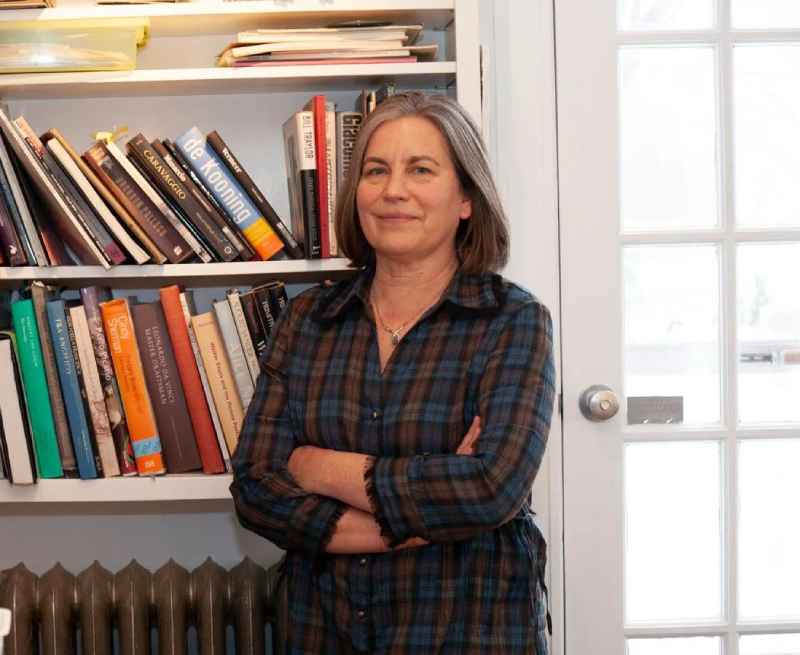
Jessica Gandolf has built a respected and quietly influential career in contemporary American art, recognised for paintings that balance abstraction, pattern, and subtle emotional depth. Her work does not rely on spectacle or shock; instead, it invites prolonged looking, rewarding viewers with layered colour relationships, rhythmic structures, and an unmistakable sense of intention. Over the years, she has established herself as an artist whose paintings feel both carefully constructed and intuitively alive, positioning her among the notable painters working in the United States today.
Table of Contents
ToggleEarly Life and Artistic Foundations
Jessica Gandolf’s artistic sensibility was shaped early by an environment that valued creativity, observation, and intellectual curiosity. Growing up in New York City, she was surrounded by museums, galleries, and a dense cultural landscape that exposed her to art as a living, evolving practice rather than a distant or academic pursuit. This early proximity to art institutions and creative communities played a significant role in shaping her visual awareness and confidence in pursuing painting as a lifelong discipline.
From an early age, Gandolf demonstrated an interest in drawing and colour. Rather than gravitating solely toward representational work, she was drawn to the emotional power of shapes, textures, and compositional balance. This inclination would later become a defining feature of her mature practice.
Academic Training and Influences
Formal education played a crucial role in refining Jessica Gandolf’s artistic language. She earned her undergraduate degree from Oberlin College, an institution known for its strong emphasis on both critical thinking and creative exploration. At Oberlin, she was encouraged to experiment broadly, testing different materials, visual approaches, and conceptual frameworks.
She later completed her Master of Fine Arts degree at Brooklyn College, where she studied under respected artists and educators. During this period, Gandolf developed a disciplined studio practice while also deepening her understanding of art history and contemporary theory. Rather than simply adopting prevailing trends, she learned to question them, focusing instead on what sustained her curiosity and emotional engagement with painting.
Her time in Paris further enriched her artistic perspective. Immersion in European painting traditions, combined with exposure to modernist and postmodernist works, reinforced her appreciation for structure, surface, and colour relationships. These experiences did not radically alter her direction, but they sharpened her sense of purpose and expanded her visual vocabulary.
Development of a Personal Painting Style
Jessica Gandolf’s work is often described as abstract, yet it resists strict categorisation. Her paintings typically combine geometric suggestions, organic forms, and repeating patterns, creating compositions that feel both ordered and fluid. Colour plays a central role, not as decoration, but as a structural element that guides the viewer’s eye and emotional response.
Rather than pursuing pure abstraction, Gandolf allows hints of imagery and spatial depth to emerge. These subtle references give the viewer something to hold onto without dictating a fixed interpretation. The result is work that feels open-ended, encouraging personal engagement and reflection.
Her surfaces reveal careful layering and revision. Brushstrokes are deliberate, but never rigid. The balance between control and spontaneity is one of the defining characteristics of her paintings. This tension gives the work its quiet energy and lasting appeal.
Themes and Conceptual Approach
The themes in Jessica Gandolf’s paintings are rarely overt or narrative-driven. Instead, they revolve around perception, balance, and the emotional resonance of visual relationships. Her work often explores how separate elements can coexist within a single frame, maintaining their individuality while contributing to a unified whole.
Pattern is a recurring motif, used not as ornamentation but as a structural tool. Repetition creates rhythm, while variation prevents monotony. This approach mirrors broader human experiences, such as routine and disruption, harmony and tension.
Gandolf’s paintings also reflect an interest in time and process. Layers of paint suggest accumulation, change, and reconsideration. Viewers can sense the decisions made and unmade during the creation of each piece, which adds depth to the viewing experience.
Exhibitions and Professional Recognition
Over the years, Jessica Gandolf has exhibited her work widely in solo and group exhibitions across the United States. Her paintings have been shown in respected galleries and cultural institutions, earning attention from collectors, critics, and fellow artists.
Her exhibitions are often praised for their coherence and quiet confidence. Rather than overwhelming the viewer, her shows tend to create a contemplative atmosphere, allowing each painting to speak on its own terms while contributing to a larger visual conversation.
In addition to gallery exhibitions, Gandolf has received recognition through fellowships and artist residencies. These opportunities have provided her with time, space, and community, enabling her to deepen her practice and explore new directions without the pressure of immediate commercial outcomes.
Teaching and Academic Contributions
Beyond her studio practice, Jessica Gandolf has made significant contributions as an educator. She has taught painting and related subjects at respected liberal arts colleges, where she is known for her thoughtful, student-centred approach.
Her teaching philosophy emphasises observation, patience, and critical engagement. Rather than imposing a particular style, she encourages students to develop their own visual language while understanding the technical and conceptual foundations of painting. This balance between guidance and independence reflects her broader approach to art-making.
Through teaching, Gandolf has influenced a new generation of artists, extending her impact beyond her own body of work. Her role as an educator underscores her commitment to painting as a living, evolving discipline.
Life and Work in Maine
In recent years, Jessica Gandolf has lived and worked in Maine, a setting that has subtly influenced her practice. The region’s natural light, changing seasons, and quieter pace offer a contrast to the intensity of urban environments. While her work is not explicitly landscape-based, the sense of space and rhythm found in her paintings resonates with the surrounding environment.
Living in a smaller artistic community has also allowed for deeper connections and sustained focus. Gandolf’s studio practice reflects this balance between engagement with the broader art world and immersion in daily, disciplined work.
Artistic Legacy and Ongoing Practice
Jessica Gandolf’s career exemplifies a commitment to depth over novelty. Rather than chasing trends, she has steadily refined a body of work that feels cohesive, honest, and enduring. Her paintings reward repeated viewing, revealing new relationships and subtleties over time.
As contemporary art continues to evolve rapidly, Gandolf’s work serves as a reminder of the value of sustained inquiry and material engagement. Her practice demonstrates that painting remains a vital medium, capable of addressing complex emotional and perceptual questions without relying on spectacle or provocation.
(FAQs)
Who is Jessica Gandolf best known as?
Jessica Gandolf is best known as a contemporary American painter whose work blends abstraction, pattern, and subtle emotional depth through carefully structured compositions.
What type of art does Jessica Gandolf create?
She primarily creates oil paintings that explore colour relationships, rhythm, and balance, often combining abstract forms with hints of structure and spatial suggestion.
Where has Jessica Gandolf exhibited her work?
Her work has been exhibited in galleries and institutions across the United States, including both solo and group exhibitions.
Does Jessica Gandolf also teach art?
Yes, she has taught painting and related subjects at respected colleges, where she is known for encouraging students to develop their own artistic voices.
What distinguishes Jessica Gandolf’s painting style?
Her style is distinguished by a balance between control and spontaneity, thoughtful use of pattern, and an emphasis on emotional resonance rather than explicit narrative.
Conclusion
Jessica Gandolf stands out as an artist who has built a meaningful and respected career through consistency, reflection, and dedication to her craft. Her paintings offer a space for quiet engagement, inviting viewers to slow down and explore the relationships between colour, form, and emotion. In an art world often driven by immediacy, her work reminds us of the lasting power of thoughtful, well-made painting.