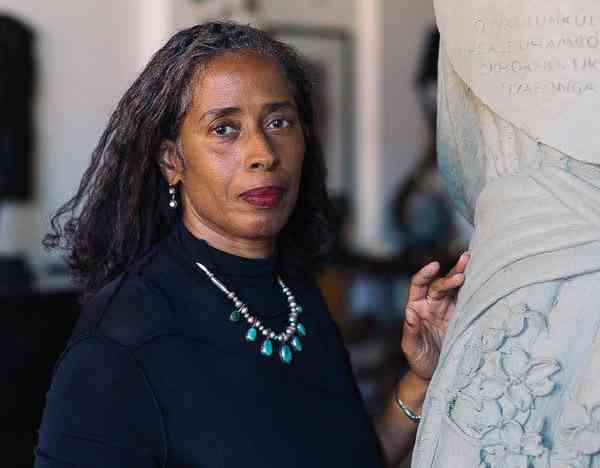
Vinnie Bagwell is a name that holds growing significance in the world of American public art. Her sculptures do more than occupy physical space; they tell stories, restore overlooked histories, and invite communities to reflect on identity, memory, and resilience. Through figurative bronze works placed in public settings, Vinnie Bagwell has carved a powerful role for herself as an artist who connects the past to the present in meaningful and lasting ways..
Early Life and Personal Background
Vinnie Bagwell was born and raised in New York, where her early life was influenced by the cultural richness and historical depth of the region. Growing up, she was surrounded by stories of community, struggle, and achievement that would later become central themes in her artistic work. While she did not initially set out to become a sculptor, creativity and curiosity were constant elements of her upbringing.
Unlike many artists who follow a traditional academic path in fine arts, Vinnie Bagwell’s journey was unconventional. She did not attend a formal sculpture program or study under renowned masters in an institutional setting. Instead, her approach to art was shaped by observation, self-study, and a personal drive to express ideas that she felt were missing from public narratives.
This nontraditional background became a strength rather than a limitation. It allowed her to develop a voice that was authentic, grounded, and free from strict stylistic conventions. Her lived experiences and deep connection to community history informed her work in ways that formal training alone could not.
Discovering Sculpture as a Calling
Vinnie Bagwell began sculpting later in life, a fact that often surprises those who encounter her work for the first time. Her entry into sculpture was motivated by a desire to see stories like her own reflected in public spaces. She noticed that monuments and statues frequently celebrated figures and narratives that excluded the contributions and struggles of African Americans.
This realization became a turning point. Sculpture, particularly public sculpture, offered a powerful medium through which she could address historical omissions. Working primarily with clay and later casting in bronze, she taught herself the technical skills required to translate ideas into lasting physical forms.
Her learning process was hands-on and immersive. She studied anatomy, proportion, and facial expression through practice rather than textbooks alone. This tactile relationship with her materials helped her develop a style that feels intimate and human, even when rendered in monumental scale.
Artistic Style and Philosophy
The artistic style of Vinnie Bagwell is rooted in figurative realism, but it extends beyond surface likeness. Her sculptures aim to capture emotion, dignity, and narrative depth. Each figure she creates is infused with intention, designed to communicate a story that resonates with viewers on both personal and collective levels.
Vinnie Bagwell believes that public art should serve the people who encounter it daily. For her, sculpture is not an abstract exercise meant only for galleries or private collections. It is a form of visual storytelling that belongs in parks, transit centers, and civic spaces where it can spark reflection and conversation.
A defining element of her philosophy is respect for historical truth. Before beginning a project, she conducts extensive research into the lives and contexts of her subjects. This research ensures that her work is not only visually compelling but also historically grounded. The result is art that educates as much as it inspires.
Commitment to African American History
One of the most important aspects of Vinnie Bagwell’s career is her dedication to highlighting African American history. She focuses on individuals and communities whose stories have often been marginalized or simplified in mainstream narratives. Through her sculptures, she restores complexity and humanity to these histories.
Her work frequently explores themes such as enslavement, resistance, cultural achievement, and freedom. Rather than presenting these themes in a purely symbolic way, she gives them a human face. This approach helps viewers connect emotionally with historical experiences that might otherwise feel distant.
By placing these works in public spaces, Vinnie Bagwell ensures that history is not confined to textbooks or museums. It becomes part of everyday life, accessible to people of all ages and backgrounds.
Major Public Art Projects
Over the years, Vinnie Bagwell has completed several large-scale public art projects that have earned critical acclaim and community recognition. These works are often installed in locations that carry historical or cultural significance, enhancing their impact.
Her public sculptures are known for their scale, detail, and emotional presence. Life-sized and larger-than-life figures invite viewers to engage directly with the work, encouraging reflection on the stories being told. These installations often become landmarks within their communities, serving as points of pride and remembrance.
Each major project represents years of planning, research, and collaboration. Vinnie Bagwell works closely with local organizations, historians, and civic leaders to ensure that her sculptures align with community values and historical accuracy.
The Role of Community Engagement
Community involvement is central to Vinnie Bagwell’s creative process. She believes that public art should reflect the voices and experiences of the people who live alongside it. As a result, she often engages with community members during the planning stages of her projects.
These conversations help shape the final work, ensuring that it resonates with those who will encounter it most often. Community engagement also fosters a sense of shared ownership, transforming sculptures from isolated artworks into collective expressions of memory and identity.
This collaborative approach has strengthened the relationship between Vinnie Bagwell and the communities she serves. It also reinforces the idea that art can be a tool for dialogue, understanding, and healing.
Challenges and Perseverance
The path to recognition in the art world is rarely smooth, and Vinnie Bagwell’s journey is no exception. As a self-taught sculptor and a woman of color working in a field historically dominated by others, she faced skepticism and barriers along the way.
Securing funding, gaining access to public commissions, and earning institutional support required persistence and resilience. Rather than allowing these challenges to discourage her, Vinnie Bagwell used them as motivation to refine her craft and advocate for the importance of inclusive representation in public art.
Her success stands as a testament to the power of perseverance. It also highlights the need for broader support of diverse voices within the arts, particularly in public spaces that shape cultural memory.
Recognition and Cultural Impact
Vinnie Bagwell’s work has garnered recognition from arts organizations, cultural institutions, and civic bodies. Awards and honors have acknowledged not only her technical skill but also the social and educational value of her sculptures.
Beyond formal recognition, her greatest impact may be seen in the way people respond to her work. Viewers often describe feeling seen, moved, or inspired when encountering her sculptures. For many, these works provide a sense of validation and connection to histories that reflect their own experiences.
Her influence extends beyond individual projects. Vinnie Bagwell has contributed to broader conversations about who is represented in public art and why that representation matters. In doing so, she has helped pave the way for future artists committed to social awareness and historical integrity.
Educational Value of Her Work
Another important dimension of Vinnie Bagwell’s legacy is the educational role her sculptures play. Teachers, students, and families often use her public installations as starting points for learning about history, culture, and social justice.
Because her work is accessible and visually engaging, it appeals to a wide audience. Children can connect with the human figures, while adults can appreciate the historical context and artistic craftsmanship. This multigenerational appeal enhances the educational reach of her art.
In this way, Vinnie Bagwell’s sculptures function as open-air classrooms, encouraging curiosity and lifelong learning.
(FAQs)
Who is Vinnie Bagwell best known for portraying in her sculptures?
Vinnie Bagwell is best known for creating sculptures that highlight African American historical figures and communities, focusing on stories that have been overlooked or underrepresented in public art.
Is Vinnie Bagwell a formally trained sculptor?
No, Vinnie Bagwell is a self-taught sculptor. She developed her skills through independent study, hands-on practice, and extensive research rather than formal academic training in sculpture.
What materials does Vinnie Bagwell primarily use?
She primarily works with bronze and bronze-based materials, which allow her sculptures to endure in public spaces while capturing fine detail and expressive depth.
Why is public art important to Vinnie Bagwell?
Public art is important to her because it reaches a broad audience and plays a role in shaping collective memory. She believes public spaces should reflect diverse histories and experiences.
How does Vinnie Bagwell choose her subjects?
She selects subjects based on historical significance, cultural impact, and personal resonance, often focusing on stories that deserve greater visibility and recognition.
Conclusion
Vinnie Bagwell has established herself as a powerful voice in American public art through dedication, authenticity, and a deep respect for history. Her sculptures do more than honor the past; they challenge viewers to engage with it thoughtfully and honestly. By bringing marginalized stories into public view, she reshapes the cultural landscape and expands the narrative of who and what deserves recognition.
Through her self-taught journey, commitment to community, and unwavering artistic vision, Vinnie Bagwell continues to leave a lasting mark on public spaces and the people who encounter her work. Her legacy is not only measured in bronze and stone but in the conversations, connections, and understanding her art inspires.