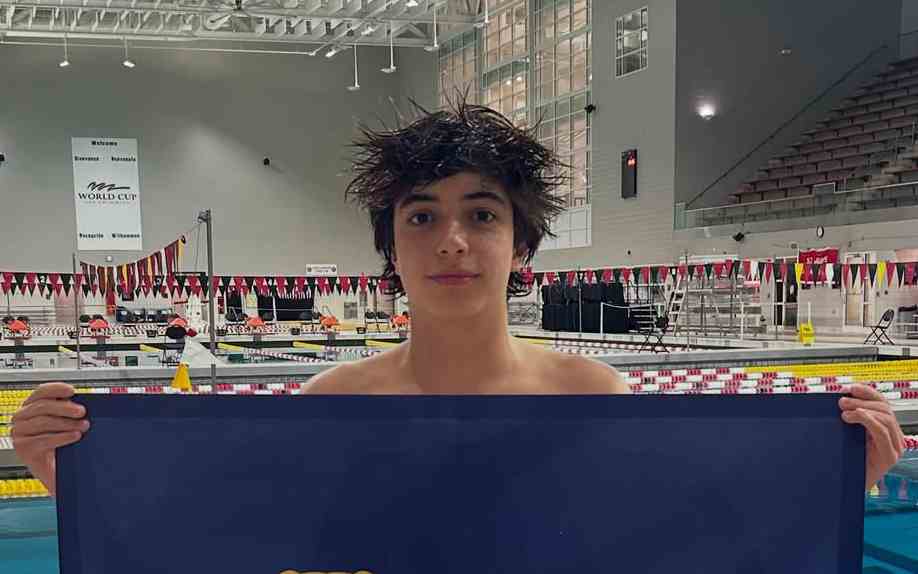
In the highly competitive world of American diving, few young athletes are generating as much excitement as Dylan Zimsky. With a powerful presence on the board, technical precision in the air, and the composure of a seasoned competitor, he represents a new generation of elite U.S. divers. From dominating regional championships to representing Team USA internationally, his journey reflects discipline, ambition, and relentless improvement.
Early Life and Introduction to Diving
Every elite athlete begins somewhere, and for Dylan Zimsky, the journey started in Maryland. Growing up in the Bethesda–Potomac area, he was introduced to aquatics at a young age. Like many future divers, he first developed comfort in the water before transitioning into structured training.
What separated him early on was not just natural ability, but consistency and focus. Coaches noticed his body control, aerial awareness, and ability to quickly absorb technical corrections. These traits are critical in diving, where millimeters of precision determine success.
His early development was shaped by disciplined practice routines and strong mentorship, laying a technical foundation that would later support national-level competition.
Competitive Development and Club Training
Montgomery Dive Club Foundation
One of the major influences in Dylan Zimsky’s rise has been structured club training. Competing under the Montgomery Dive Club banner, he gained exposure to high-level coaching, rigorous practice schedules, and elite competition standards.
Club diving in the United States is intense. Athletes often train multiple hours daily, combining dryland training, strength conditioning, trampoline work, and board repetition. Through this environment, he refined:
- Forward and reverse dive consistency
- Twisting mechanics and mid-air control
- Platform stability under pressure
- Clean water entry execution
The repetition and discipline required at this level built both confidence and competitive toughness.
High School Excellence
During his time at Bullis School, Dylan Zimsky emerged as one of the strongest high school divers in his region. Competing in conference and championship meets, he consistently placed at or near the top.
High school diving often emphasizes 1-meter springboard competition, but elite divers use it as a stepping stone to broader events. His performances earned statewide recognition and contributed to his reputation as one of the top divers in his graduating class.
National Recognition and Junior Championships
The transition from regional competitor to national contender is a major milestone. Dylan Zimsky made that leap with impressive results at USA Diving Junior National Championships.
USA Diving Junior Nationals
Junior Nationals are among the most competitive youth diving events in the country. Athletes from across the United States compete for ranking, recognition, and international selection opportunities.
His performance at these events demonstrated:
- Strong dive list difficulty
- Minimal deductions on entries
- Competitive scoring across multiple events
- Composure in high-pressure finals
Competing at this level requires not only physical skill but mental resilience. The ability to execute complex dives consistently separates elite prospects from the field.
International Representation
One of the standout achievements in his young career has been representing Team USA at the Roma Junior Diving Cup in Italy. International competition adds new variables: unfamiliar pools, travel fatigue, and global talent.
For Dylan Zimsky, this experience marked a significant step forward. Competing against top junior divers from other nations strengthened his exposure to international scoring standards and competitive expectations.
Such representation signals trust from USA Diving and confirms his position among the nation’s top junior athletes.
Technical Diving Strengths
Elite diving is a combination of biomechanics, explosive power, timing, and mental discipline. Several qualities stand out in Dylan Zimsky’s competitive profile.
1-Meter and 3-Meter Springboard
On springboard, rhythm and board feel are essential. He demonstrates:
- Controlled hurdle approach
- Balanced takeoff
- Efficient rotational speed
- Consistently vertical entries
These elements contribute to higher execution scores and reduced splash, a major scoring factor in modern diving.
10-Meter Platform
Platform diving introduces greater risk and higher difficulty. Precision becomes even more critical due to increased height and air time.
In platform competition, Dylan Zimsky has shown:
- Strong spatial awareness
- Confident takeoff mechanics
- Tight body alignment in twists
- Clean vertical alignment on entry
The ability to compete across all three major events—1m, 3m, and 10m—adds depth to his competitive resume and increases collegiate recruitment value.
Mental Toughness and Competitive Mindset
Athletic ability alone does not create champions. Diving demands intense concentration and emotional control.
Observers often highlight how Dylan Zimsky maintains focus before each dive. Pre-dive routines, breath control, and visual rehearsal play critical roles in successful execution.
Mistakes happen in diving. A slight over-rotation or entry angle error can impact scoring dramatically. What separates strong competitors is their response. Resetting mentally between rounds and maintaining composure is essential, and he has consistently demonstrated that ability in major competitions.
Recruiting Spotlight and Collegiate Commitment
As one of the top divers in his class, Dylan Zimsky attracted attention from elite collegiate programs. NCAA diving is highly competitive, with major universities investing heavily in aquatic facilities, coaching, and athletic development.
His commitment to Duke University reflects both athletic and academic alignment. Duke’s swim and dive program competes in the Atlantic Coast Conference (ACC), one of the strongest conferences in the country.
Why Collegiate Diving Matters
College diving provides:
- Advanced strength and conditioning programs
- Elite coaching resources
- High-level national competition exposure
- Olympic development pathways
For athletes like Dylan Zimsky, NCAA competition is a critical bridge between junior success and potential senior international competition.
Training Routine and Discipline
While official training details vary, elite divers typically follow a structured weekly routine that includes:
- Board repetition sessions
- Dryland tumbling and trampoline drills
- Core strength development
- Shoulder stability work
- Flexibility and mobility training
Consistency is the defining factor. Improvement in diving comes from small, incremental adjustments repeated thousands of times.
Recovery is equally important. Injury prevention—particularly for shoulders, knees, and lower back—is central to long-term success in the sport.
Influence on Youth Diving Community
Young divers across the Mid-Atlantic region look up to athletes who represent both excellence and sportsmanship. Dylan Zimsky has become a recognizable name in regional diving circles.
Athletes who compete internationally inspire younger teammates to raise their standards. When young divers see someone from their own club or region succeed nationally, it reinforces the belief that elite performance is attainable.
Role models in niche sports like diving are especially impactful because pathways to visibility are narrower than in mainstream athletics.
Competitive Style and Signature Approach
Every diver develops a style shaped by body type, coaching influence, and personality.
Observers often describe Dylan Zimsky’s approach as controlled yet assertive. He balances aggression in takeoff with calm execution mid-air. This balance is crucial—too much force can disrupt timing, while excessive hesitation reduces height and rotation speed.
His clean vertical entries consistently earn strong impression scores, reinforcing the technical discipline behind his performances.
Future Outlook and Olympic Potential
Projecting long-term athletic success is complex, but certain indicators suggest strong upward momentum:
- Multi-event competitiveness
- National championship experience
- International exposure
- NCAA commitment to a top program
If development continues at its current pace, Dylan Zimsky could become a serious contender in senior-level national events. From there, Olympic Trials qualification becomes a realistic long-term goal.
The United States has a proud history of Olympic diving success. Athletes who begin with strong junior foundations often progress into senior prominence with the right support and health management.
(FAQs)
What events does Dylan Zimsky compete in?
He competes in 1-meter springboard, 3-meter springboard, and 10-meter platform diving.
Has Dylan Zimsky represented the United States internationally?
Yes, he has competed internationally as part of Team USA at the Roma Junior Diving Cup.
Which university did Dylan Zimsky commit to?
He committed to Duke University to continue his academic and athletic career.
What makes Dylan Zimsky stand out among junior divers?
His versatility across events, strong technical form, and mental composure under pressure set him apart.
Is Dylan Zimsky considered a top recruit in his class?
Yes, he has been ranked among the top NCAA diving recruits in his graduating class.
Conclusion
The rise of Dylan Zimsky reflects what disciplined training, mental resilience, and competitive exposure can produce in elite youth athletics. From Maryland club competitions to international representation, his trajectory continues upward. With collegiate competition ahead and national-level aspirations in sight, he stands as one of the most promising young divers in American aquatics.
As he transitions into the NCAA stage and refines his skills against even stronger competition, the diving community will be watching closely. The combination of technical precision, competitive experience, and structured development positions him for continued growth—and potentially, future appearances on the biggest stages in the sport.