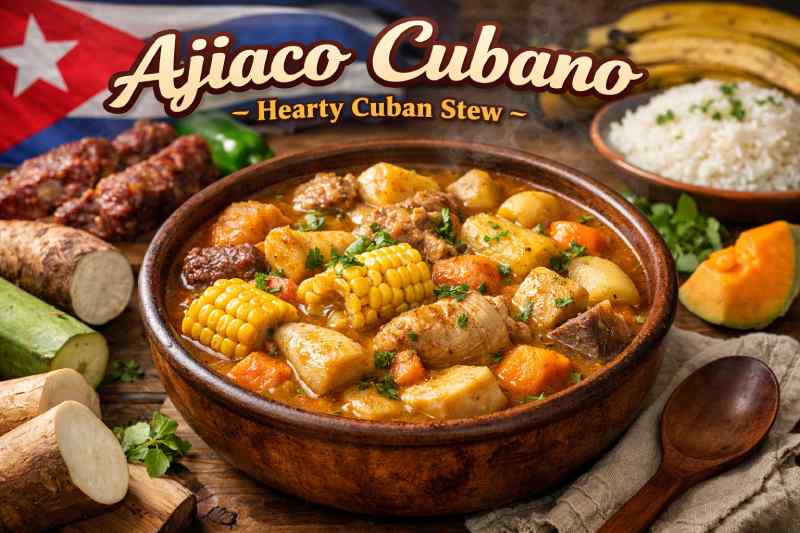
Few dishes capture the spirit of a nation quite like Ajiaco Cubano. Thick, rustic, and deeply satisfying, this traditional Cuban stew is more than just comfort food—it’s a reflection of history, culture, and family tradition simmered together in one pot. Unlike lighter soups, this is a bold, layered dish packed with meats, root vegetables, corn, and rich seasonings that develop depth over hours of slow cooking.
What Is Ajiaco Cubano?
At its heart, Ajiaco Cubano is a hearty stew made with a combination of meats, starchy root vegetables known as viandas, corn, squash, and aromatic seasonings. It is thicker than a soup but looser than a casserole, striking a balance that makes it both comforting and substantial.
The word “ajiaco” appears in several Latin American countries, but each version differs significantly. The Cuban version stands apart because of its diverse mixture of ingredients and its deep cultural symbolism. It blends indigenous Taíno roots, Spanish colonial influences, and African culinary traditions into one unified dish.
This is not a quick weeknight recipe. It’s a slow-building, layered stew that improves with patience. As ingredients cook down, flavors meld and thicken, creating a rich, almost creamy texture without the need for dairy.
The Historical Roots of Ajiaco Cubano
To truly appreciate Ajiaco Cubano, it helps to understand its background. The dish traces back to pre-colonial Cuba, when indigenous Taíno people cooked root vegetables and meats in large communal pots. When Spanish settlers arrived, they introduced new meats, livestock, and seasonings. Later, African culinary traditions added further depth and technique.
Over centuries, the dish evolved into a symbol of Cuban identity. Cuban anthropologist Fernando Ortiz famously used the stew as a metaphor for Cuban culture—different ingredients retaining individuality while contributing to a unified whole.
Today, the dish remains a culinary emblem. Whether prepared in Havana or Miami, Ajiaco Cubano continues to represent resilience, adaptation, and heritage.
Core Ingredients That Define the Dish
While recipes vary from household to household, certain ingredients are considered essential.
Meats
Traditional recipes often include multiple proteins. Common options include:
- Chicken (bone-in pieces for richer flavor)
- Pork (fresh cuts or pork ribs)
- Beef (chuck or shank)
- Salted or cured meats for added depth
Using multiple meats gives the stew complexity. The combination creates a layered broth that feels hearty and substantial.
Viandas (Root Vegetables)
The defining characteristic of Ajiaco Cubano is its use of starchy tropical roots. These vegetables break down slightly during cooking, naturally thickening the stew.
Typical choices include:
- Yuca (cassava)
- Malanga (taro root)
- Boniato (Cuban sweet potato)
- Green plantains
- Ripe plantains
Each root brings a slightly different texture and flavor. Some remain firm, while others soften into the broth.
Vegetables and Aromatics
To balance the starch and protein, the stew includes:
- Corn on the cob, cut into chunks
- Calabaza squash
- Onion
- Garlic
- Bell peppers
- Tomato paste or crushed tomatoes
- Cumin and oregano
The aromatics create a base known in Cuban cooking as sofrito, which provides warmth and subtle sweetness.
How Ajiaco Cubano Is Traditionally Cooked
The cooking process is deliberate and layered. First, meats are simmered to develop a flavorful broth. Skimming impurities ensures clarity and depth. Once the broth is established, the harder root vegetables are added. Softer ingredients follow later to prevent overcooking.
The stew typically simmers for several hours. As it cooks, starches from the root vegetables thicken the broth naturally. Some cooks lightly mash portions of the roots against the side of the pot to increase thickness.
The result is a stew that feels rustic and satisfying, with tender meat and tender-but-structured vegetables.
Regional Variations and Family Traditions
Like many traditional dishes, Ajiaco Cubano has countless variations. Some families prefer a heavier meat presence, while others focus on root vegetables. In eastern Cuba, certain local roots may be more prominent. In Cuban-American households, ingredient substitutions sometimes occur due to availability.
For example, malanga may be replaced with taro in some U.S. kitchens. Calabaza squash might be substituted with butternut squash. Despite these adjustments, the spirit of the dish remains intact.
Every household believes its version is the authentic one—and in many ways, they’re all correct.
Cultural Significance in Cuban Communities
Food carries memory, and Ajiaco Cubano is often associated with celebrations, gatherings, and cooler weather. It’s common at family reunions or special occasions where large pots can serve many people.
In Cuban-American communities, especially in Florida, the dish connects generations to their heritage. For many, it represents a tangible link to grandparents and ancestral homes.
Unlike trendy restaurant fare, this stew belongs in kitchens, not fine dining establishments. Its charm lies in its homestyle authenticity.
Nutritional Profile and Health Considerations
Despite being hearty, Ajiaco Cubano offers balanced nutrition. It includes protein from meats, fiber from root vegetables, and vitamins from squash and corn.
Root vegetables provide slow-digesting carbohydrates, making the dish filling and sustaining. When prepared with leaner cuts of meat and moderate salt, it can be a wholesome, nutrient-dense meal.
Because it relies on natural starches rather than cream or heavy thickeners, the texture remains rich without excessive fat.
Why Ajiaco Cubano Appeals to Modern Home Cooks
Today’s home cooks increasingly appreciate slow food traditions. In an era of quick meals and processed convenience, dishes like Ajiaco Cubano offer authenticity and depth.
The stew is adaptable. It can be cooked in a traditional stockpot, a slow cooker, or even a modern pressure cooker. Leftovers often taste better the next day as flavors continue to develop.
It’s also budget-friendly. Root vegetables are affordable and filling, and even modest portions of meat stretch far in a stew format.
Tips for Making the Best Version at Home
If you’re preparing Ajiaco Cubano in your kitchen, consider these expert tips:
- Use bone-in meats for richer broth.
- Layer ingredients carefully; add dense roots first.
- Avoid over-stirring to keep vegetables intact.
- Taste frequently and adjust seasoning gradually.
- Allow the stew to rest before serving to deepen flavor.
Patience is key. Rushing the cooking process can result in uneven textures or underdeveloped flavor.
Serving Suggestions
Traditionally, the stew is served hot in deep bowls. Some households accompany it with white rice on the side. Others enjoy it as a standalone meal.
A squeeze of fresh lime or a sprinkle of chopped cilantro can brighten the rich base. However, purists often prefer it exactly as it comes from the pot.
Leftovers can be reheated gently, and many believe the second-day version of Ajiaco Cubano tastes even better than the first.
(FAQs)
What makes Ajiaco Cubano different from other ajiaco dishes?
The Cuban version is thicker and includes multiple meats and tropical root vegetables, unlike the Colombian version, which is typically chicken-based with potatoes.
Can I make Ajiaco Cubano without certain tropical roots?
Yes. While traditional roots provide authenticity, you can substitute similar starchy vegetables like taro or butternut squash if needed.
Is Ajiaco Cubano spicy?
No. The dish is flavorful and aromatic but not traditionally spicy. Heat can be added separately if desired.
How long does Ajiaco Cubano last in the refrigerator?
Properly stored in an airtight container, it can last three to four days. The flavor often improves after a day.
Can Ajiaco Cubano be frozen?
Yes. It freezes well, though some root vegetables may soften slightly upon reheating.
Conclusion
Ajiaco Cubano is more than a traditional stew—it is a living symbol of Cuban history, identity, and resilience. With its blend of meats, root vegetables, and aromatic seasonings, it offers depth, nourishment, and comfort in every spoonful. Whether prepared in Havana or an American kitchen, the dish continues to unite families and preserve culinary heritage. Slow-cooked, generous, and unapologetically rustic, it stands as one of Cuba’s most meaningful contributions to the world of food.