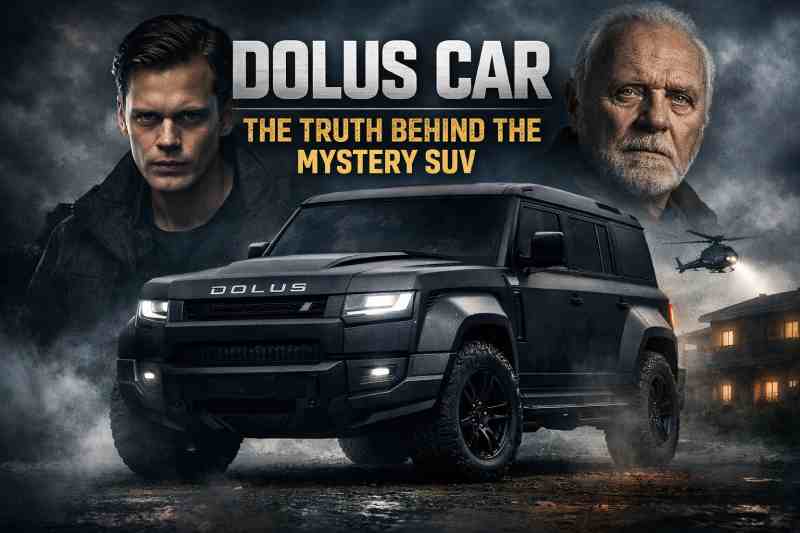
In recent months, the name Dolus Car has sparked curiosity across social media, auto forums, and movie discussion boards in the United States. Is it a new luxury SUV brand? A limited-edition concept vehicle? Or something entirely fictional?
The answer is more interesting than many people expect.
What appears at first glance to be an ultra-modern, high-end SUV with a dark personality actually originates from Hollywood storytelling rather than a Detroit production line. Yet despite its fictional roots, the vehicle’s design, presence, and symbolism have left a strong impression on automotive enthusiasts.
The Origin of the Dolus Car
The story of the Dolus Car begins not in an auto show reveal, but on a movie set.
The vehicle was created specifically for the 2025 psychological thriller film Locked, directed by David Yarovesky and starring Bill Skarsgård and Anthony Hopkins. In the film, the SUV is not just transportation — it plays a central role in the narrative.
The name “Dolus” comes from Latin, meaning deception or trickery. That definition aligns perfectly with the vehicle’s purpose in the movie. It symbolizes entrapment, control, and psychological tension.
Unlike most movie cars that are slightly modified production models, this SUV was extensively customized to create a distinctive identity. The result was something that looked entirely new and exclusive, which is why many viewers assumed it must be a real luxury brand.
Is the Dolus Car a Real Production Vehicle?
No, it is not.
There is no automotive company in the United States or globally that manufactures or sells a vehicle under that name. The Dolus Car was created exclusively for cinematic storytelling and does not exist as a dealership product.
However, that does not mean it was built from scratch.
Behind the dramatic body panels and custom badging lies a heavily modified version of the modern Land Rover Defender platform. The Defender’s boxy stance, strong proportions, and rugged luxury made it a suitable base for transformation into something darker and more mysterious.
Production teams reportedly built multiple versions:
- A “hero” version for close-up shots
- A specialized interior rig for camera placement
- A stunt version used for high-impact scenes
One of the surviving versions was later displayed at the Volo Museum, further fueling speculation among visitors who believed it was a rare concept SUV.
Design Philosophy: Why It Feels So Real
The reason the Dolus Car continues to confuse audiences is simple: it looks believable.
Exterior Styling
The design team emphasized:
- Matte dark finishes
- Minimalistic branding
- Aggressive grille detailing
- High ride height
- Strong, squared-off body lines
These elements mirror current trends in American luxury SUVs, where understated power is often preferred over flashy styling.
In fact, if the vehicle had debuted at a major auto show without explanation, many consumers might have assumed it was an electric or hybrid concept from a premium manufacturer.
Interior Atmosphere
The interior design played a significant narrative role in the film. It was intentionally crafted to feel:
- Enclosed
- High-tech
- Slightly intimidating
- Isolated from the outside world
Luxury materials combined with subtle lighting and modern digital controls created a cabin that felt expensive yet claustrophobic — exactly what the storyline required.
This psychological layering is one reason the Dolus Car stands out compared to typical movie vehicles.
Why People Think It’s a Real Brand
Search trends in the United States show a spike in interest shortly after the film’s release. Many viewers searched:
- “Is Dolus a real car brand?”
- “Where can I buy a Dolus SUV?”
- “Dolus price in USA”
- “Dolus electric vehicle”
There are three major reasons for this confusion:
1. Professional-Level Branding
The badge, typography, and emblem design were polished and believable. Nothing about the branding looked fictional or exaggerated.
2. Realistic Engineering Base
Because it was built on a recognizable luxury SUV platform, the proportions and driving scenes looked authentic.
3. Modern Automotive Trends
Today’s EV startups frequently launch new names that consumers have never heard before. Brands appear seemingly overnight. In that context, Dolus did not seem unrealistic.
Cultural Impact in the United States
Although it was created for a film, the Dolus Car sparked broader conversations about how vehicles influence storytelling.
In American cinema, cars often become characters:
- The DeLorean in Back to the Future
- The Batmobile in various Batman films
- The Mustang in classic action movies
While the Dolus Car may not have the same legacy yet, it demonstrates how automotive design can elevate suspense and atmosphere.
More importantly, it shows how easily a fictional vehicle can generate real-world curiosity in today’s digital environment.
Could Dolus Become a Real Brand?
Technically, yes — but there are no current announcements suggesting it will.
Hollywood has inspired real automotive production before. Concept vehicles in films sometimes lead to collaborations or limited editions. However, in this case, the name and design remain tied to intellectual property rights from the film production.
If an entrepreneur attempted to launch a luxury SUV under the same name, legal complexities would likely arise.
Still, the concept reflects something interesting: consumers are clearly open to bold, new automotive identities.
The Role of Platform Vehicles in Film Production
Many people assume movie vehicles are entirely custom-built from scratch. In reality, production studios often use existing automotive platforms for practical reasons:
- Safety regulations
- Reliability
- Familiar driving characteristics
- Easier maintenance
- Parts availability
Using the Defender as a base ensured that stunt sequences and driving scenes could be executed safely and efficiently.
This approach balances authenticity with cinematic creativity.
Automotive Branding and Psychological Influence
The name choice was not accidental.
“Dolus” evokes deception, hidden danger, and manipulation. In branding psychology, darker names often create intrigue and authority. Even outside the film context, the word carries weight.
Imagine if a new American luxury SUV brand launched tomorrow with:
- A minimalist logo
- Matte black flagship model
- Emphasis on exclusivity
- Limited production numbers
It would likely attract attention quickly. The Dolus Car effectively demonstrates how powerful branding alone can spark imagination.
Online Rumors and Misinformation
After the film’s release, several online posts claimed:
- It was a secret electric SUV startup
- It was a prototype for an upcoming luxury brand
- It was a government concept vehicle
None of these claims have evidence. The vehicle remains a film prop built on an existing platform.
In the age of social media, however, visual authenticity often outweighs factual verification. High-quality images can create entire narratives without official confirmation.
How to Identify Fictional Cars in the Future
If you ever see a new vehicle online and wonder whether it’s real, consider these steps:
- Check official manufacturer websites
- Look for auto show announcements
- Search for VIN registration records
- Verify dealership availability
- Confirm regulatory compliance documentation
A legitimate automotive brand in the United States must meet federal safety and emissions standards before public sale.
If none of those records exist, the vehicle is likely fictional, a concept, or a custom one-off build.
(FAQs)
Is Dolus Car available for purchase in the United States?
No. It is not a production vehicle and cannot be purchased from dealerships.
What real vehicle was used as the base?
It was heavily modified from a modern Land Rover Defender platform.
Why does the vehicle look so realistic?
Professional automotive designers customized it using authentic proportions and high-quality detailing.
Is Dolus an electric SUV?
There is no verified electric production model under that name.
Could a company launch a real SUV called Dolus in the future?
In theory, yes, but it would require legal clearance and regulatory approval.
Conclusion
The fascination surrounding the Dolus Car highlights something powerful about modern automotive culture. Today, a fictional SUV can spark nationwide searches, dealership inquiries, and online speculation within days of appearing on screen.
Although it is not a real production model, the craftsmanship behind its design makes it feel convincing enough to blur the line between cinema and reality. Built on a modified Land Rover Defender platform and developed specifically for a psychological thriller, it represents how storytelling and automotive engineering can intersect in unexpected ways.