Laban movement analysis is one of the most influential systems ever developed for studying human motion. It offers a structured and insightful way to observe, describe, and interpret how people move, making it valuable across a wide range of disciplines. From dance and theater to psychology, sports science, and even artificial intelligence, this framework continues to shape how professionals understand physical expression.
At its core, laban movement analysis goes far beyond simply identifying movement patterns. It uncovers the intention, emotion, and meaning behind motion. Whether someone is walking, gesturing, or performing on stage, every movement tells a story. This method provides the tools to read and interpret that story with clarity and precision.
What Is Laban Movement Analysis?
Laban movement analysis is a comprehensive system created to analyze human movement in a detailed and structured way. It was originally developed by Rudolf Laban, a pioneer in movement theory and modern dance.
Unlike basic observation, this method breaks movement into distinct elements that can be studied individually and together. It allows practitioners to answer key questions such as:
- What is moving?
- How is it moving?
- Why is it moving in that way?
- What does the movement communicate?
By answering these questions, laban movement analysis provides a deeper understanding of both physical behavior and emotional expression.
The Philosophy Behind Movement
One of the reasons laban movement analysis has remained relevant is its philosophical foundation. It treats movement as a form of communication, much like language. Every action carries intention, and every gesture reflects an internal state.
For example, a person rushing forward with sharp, direct movements communicates urgency or determination. On the other hand, slow, flowing movements may suggest calmness or uncertainty. These differences are not random; they are meaningful patterns that can be studied and understood.
This perspective makes the system useful not just for performers, but for anyone interested in human behavior.
The Four Core Components of Laban Movement Analysis
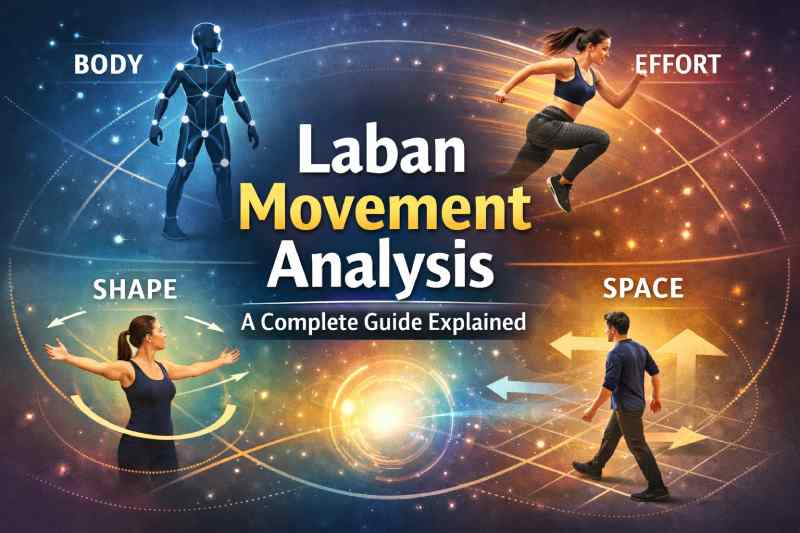
The framework of laban movement analysis is built around four major components, often referred to as BESS: Body, Effort, Shape, and Space. Each component focuses on a different aspect of movement.
Body: What Is Moving?
The Body component focuses on which parts of the body are involved in movement and how they are connected. It looks at coordination, sequencing, and patterns.
Key Considerations
- Which body parts are active?
- Are movements isolated or full-body?
- How do different parts coordinate?
For instance, a dancer may use precise hand gestures while keeping the rest of the body still, whereas an athlete may engage the entire body in a powerful motion. Understanding these patterns is essential in laban movement analysis.
Effort: The Quality of Movement
Effort is one of the most distinctive elements of laban movement analysis. It focuses on the dynamic qualities of movement, often revealing emotion and intention.
Effort is divided into four factors:
1. Weight
- Strong vs light movement
2. Time
- Sudden vs sustained movement
3. Space
- Direct vs indirect movement
4. Flow
- Bound vs free movement
These factors combine to create different movement qualities. For example, strong, direct, and sudden movement may appear aggressive or decisive, while light, indirect, and sustained movement may seem gentle or exploratory.
Shape: How the Body Changes Form
Shape refers to how the body transforms during movement. It focuses on expansion, contraction, and the relationship between the body and its environment.
Types of Shape Changes
- Rising and sinking
- Spreading and enclosing
- Advancing and retreating
A person opening their arms wide may express confidence or openness, while curling inward might suggest protection or hesitation. Laban movement analysis uses these observations to interpret meaning.
Space: Where Movement Happens
The Space component examines the direction, level, and pathway of movement.
Important Elements
- Direction (forward, backward, sideways)
- Levels (high, middle, low)
- Pathways (straight, curved, zigzag)
Understanding spatial patterns helps identify how a person interacts with their environment. In laban movement analysis, space is not just physical; it is expressive.
Practical Applications in Modern Fields
One of the reasons laban movement analysis continues to thrive, especially in the United States, is its adaptability across industries.
Performing Arts and Dance
In dance and theater, laban movement analysis is used to create and refine performances. Choreographers use it to design movement sequences, while actors use it to develop believable characters.
For example, an actor portraying a confident leader may adopt strong, direct movements, while a shy character may use softer, indirect gestures.
Psychology and Therapy
Movement reflects emotional states, making this system valuable in therapeutic settings. Dance and movement therapists use laban movement analysis to help individuals express feelings that may be difficult to verbalize.
By observing how someone moves, therapists can gain insight into their mental and emotional condition.
Sports and Physical Training
Athletes and coaches use laban movement analysis to improve performance. By analyzing movement patterns, they can identify inefficiencies and enhance technique.
For instance, adjusting the direction or timing of a movement can lead to better speed, balance, and coordination.
Business and Leadership
Body language plays a crucial role in communication. Professionals use laban movement analysis to understand nonverbal cues in leadership, negotiations, and presentations.
A leader who moves with clarity and confidence can influence how others perceive them, often without saying a word.
Technology and Animation
In animation, robotics, and AI, replicating human-like movement is a major challenge. Laban movement analysis provides a framework for creating realistic motion.
Animators use it to design characters that move naturally, while engineers apply it to develop more human-like robots.
Real-Life Example of Movement Interpretation
Imagine two individuals entering a room:
- The first walks quickly with straight posture, strong steps, and direct focus.
- The second moves slowly, with relaxed posture and wandering eye contact.
Using laban movement analysis, these movements can be interpreted as confidence and purpose in the first case, and uncertainty or calmness in the second.
This ability to interpret movement makes the system highly practical in everyday life.
Benefits of Learning Laban Movement Analysis
There are many advantages to understanding laban movement analysis, regardless of your profession.
Improved Awareness
You become more conscious of your own movement patterns and how others perceive you.
Better Communication
Understanding nonverbal cues enhances interpersonal communication.
Enhanced Creativity
Artists and performers gain new tools for expression.
Deeper Emotional Insight
Movement can reveal emotions that words cannot fully capture.
Challenges and Limitations
While laban movement analysis is powerful, it is not without challenges.
Learning Curve
The system can be complex and requires practice to master.
Subjectivity
Interpretation of movement may vary depending on context and observer experience.
Cultural Differences
Movement meanings can differ across cultures, which must be considered during analysis.
Despite these challenges, its benefits far outweigh its limitations.
How to Start Learning Laban Movement Analysis
If you are interested in learning laban movement analysis, here are some practical steps:
Observe Movement Daily
Pay attention to how people walk, gesture, and interact.
Practice Breaking Movements Down
Try identifying Body, Effort, Shape, and Space in everyday actions.
Study Professional Examples
Watch performances, sports, or films and analyze movement qualities.
Take Courses or Workshops
Formal training can deepen your understanding and provide hands-on experience.
The Future of Movement Analysis
As technology continues to evolve, laban movement analysis is becoming even more relevant. With advancements in AI, motion capture, and virtual reality, understanding human movement is more important than ever.
This system provides a foundation for bridging the gap between human behavior and digital representation. It is likely to play a key role in future innovations across multiple industries.
FAQs
What is laban movement analysis used for?
It is used to study and interpret human movement in fields like dance, acting, therapy, sports, and technology.
Is laban movement analysis only for dancers?
No, it is used in many industries, including psychology, business, and robotics.
How long does it take to learn laban movement analysis?
Basic concepts can be learned quickly, but mastering the system takes time and practice.
Can laban movement analysis improve communication skills?
Yes, it helps you understand body language and express yourself more effectively.
Is laban movement analysis still relevant today?
Absolutely, it is widely used in modern fields such as AI, animation, and leadership training.
Conclusion
Laban movement analysis remains one of the most powerful tools for understanding human movement and expression. By breaking motion into Body, Effort, Shape, and Space, it provides a clear and structured way to interpret actions that might otherwise seem complex or abstract.
Its applications across performing arts, psychology, sports, business, and technology demonstrate its versatility and lasting impact. Whether you are an artist, a professional, or simply someone curious about human behavior, learning laban movement analysis can transform the way you see movement and communication.