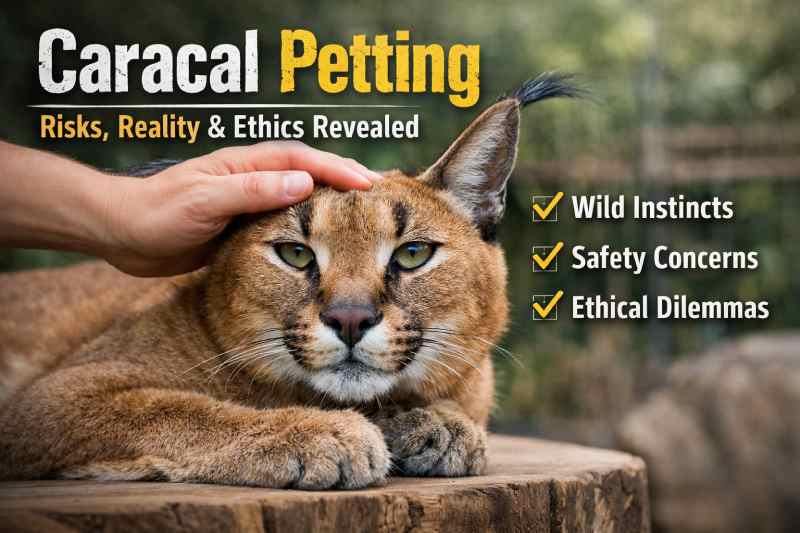
Caracal petting is a topic that has gained sudden attention online, largely because of viral videos and photos showing people calmly interacting with these elegant, sharp-eared cats. At first glance, a caracal looks like an oversized domestic cat with a royal posture and expressive eyes. This visual similarity often leads people to believe that petting a caracal is harmless or even comparable to interacting with a house cat. In reality, the subject is far more complex. Understanding caracal petting requires a deep look into the animal’s nature, behavior, upbringing, safety considerations, ethics, and long-term welfare.
Understanding the Caracal’s Nature
Caracals are wild cats by origin. They evolved to survive in harsh environments such as savannas, semi-deserts, and rocky landscapes. Every part of their body is designed for hunting and independence. Their powerful hind legs allow them to leap high into the air, their claws are built for gripping and tearing, and their senses are tuned for survival rather than companionship.
Unlike domestic cats, which have been selectively bred over thousands of years to live alongside humans, caracals have not gone through a process of domestication. This distinction is critical. Domestication changes an animal’s temperament, tolerance, and dependency on humans. Taming, on the other hand, simply means an individual animal has learned to tolerate human presence. Most examples of caracal petting involve tamed individuals, not domesticated ones.
This means that even if a caracal appears calm during petting, its instincts remain intact. Stress, fear, overstimulation, or sudden movements can trigger defensive or aggressive responses in a fraction of a second.
Why Caracal Petting Exists at All
Caracal petting usually occurs in very specific circumstances. In most cases, it happens in controlled environments such as wildlife facilities, private collections, or sanctuaries where the animal has been raised around humans from a very young age. Early socialization can make a caracal more tolerant of touch, especially from familiar handlers.
Another reason caracal petting exists is public fascination. The caracal’s unique appearance, especially its long black ear tufts and intense gaze, makes it visually appealing. Social media platforms reward striking visuals, and videos of caracal petting quickly attract attention, likes, and shares. Unfortunately, these clips rarely show the full reality behind the scenes, such as professional supervision, safety protocols, or the animal’s long-term living conditions.
In some regions, exotic animal ownership laws are loosely enforced, allowing private individuals to keep wild cats. In such cases, owners may attempt caracal petting as a way to showcase the animal’s calmness, often to justify ownership or attract online audiences.
The Difference Between Petting and Handling
One of the biggest misunderstandings surrounding caracal petting is the difference between casual petting and professional handling. Casual petting implies relaxed, voluntary interaction similar to stroking a domestic cat. Professional handling, however, is structured, cautious, and based on reading animal behavior at every moment.
Handlers who interact with caracals are trained to recognize subtle warning signs such as ear position changes, tail movement, muscle tension, or shifts in breathing. They know when to stop contact immediately. This level of awareness is not something an average person possesses, which is why unsupervised caracal petting is extremely risky.
Even in professional settings, interaction time is often limited. The goal is not to encourage dependence or constant touching, but to perform necessary care, enrichment, or controlled educational experiences.
Safety Risks Involved in Caracal Petting
Caracals are capable of causing serious injury, even without intending to harm. A playful swat from a caracal can break skin or cause deep scratches. Their bites are strong, and their reflexes are extremely fast. Unlike domestic cats, which often give clear warning signals before reacting, caracals may respond instantly when overstimulated.
Children are especially vulnerable. Their sudden movements, high-pitched voices, and lack of awareness can stress a wild animal quickly. Many experts strongly advise against allowing children anywhere near caracal petting experiences, even in controlled environments.
There is also the issue of unpredictability over time. A caracal that tolerated petting as a juvenile may become far less tolerant as it matures. Hormonal changes, territorial instincts, and natural independence often intensify with age, making continued petting unsafe.
Ethical Questions Around Caracal Petting
Beyond safety, caracal petting raises serious ethical concerns. Wild animals have complex physical and psychological needs. Limiting their environment or encouraging unnatural interactions can negatively affect their well-being. Caracals require large territories, mental stimulation through hunting behaviors, and the ability to retreat when stressed.
When caracal petting is promoted primarily for entertainment or social media content, the animal’s welfare often becomes secondary. Repeated handling, exposure to unfamiliar people, and unnatural routines can cause chronic stress. Stress in wild cats does not always show as obvious aggression. It can manifest as withdrawal, pacing, loss of appetite, or long-term health problems.
Ethical wildlife care prioritizes the animal’s natural behavior over human desire for interaction. From this perspective, caracal petting is difficult to justify except in rare cases where it directly supports animal care, rehabilitation, or education under strict professional standards.
Legal and Regional Considerations
Laws surrounding caracal petting vary widely by region. In many countries and states, owning or interacting with wild cats requires special permits. These laws exist to protect both people and animals. In areas where regulations are strict, caracal petting is generally prohibited outside licensed facilities.
In regions with weaker enforcement, caracal petting may occur more openly, but this does not mean it is safe or ethical. Legal permission does not automatically equal best practice. Prospective visitors or viewers should always consider whether an interaction respects animal welfare standards rather than simply being legally allowed.
The Role of Social Media in Shaping Perception
Social media has played a major role in normalizing the idea of caracal petting. Short videos rarely show the preparation, training, or risks involved. They present a carefully edited moment that suggests calmness and control. Viewers may assume that if one person can pet a caracal, anyone can.
This perception can encourage irresponsible behavior, including attempts to approach wild animals in inappropriate settings or interest in private ownership without understanding the consequences. The reality is that many caracals shown online live in highly controlled environments with constant supervision, and even then, incidents still occur.
Responsible Alternatives to Caracal Petting
For people fascinated by caracals, there are safer and more ethical ways to appreciate them. Observing them in accredited wildlife parks, learning about their behavior through documentaries, or supporting conservation programs all provide meaningful engagement without physical contact.
Educational programs that focus on conservation and respect for wildlife help shift the narrative away from touch-based interaction. Understanding why an animal should not be petted can be just as powerful as the experience of petting it.
Frequently Asked Questions
Is caracal petting ever safe?
Caracal petting is only considered relatively safe in rare, highly controlled environments with experienced professionals. Even then, it carries inherent risk and is not comparable to petting a domestic cat.
Can a caracal become friendly like a house cat?
A caracal can become accustomed to specific humans, but it does not become domesticated. Its instincts remain wild, and behavior can change suddenly.
Why do some caracals allow petting in videos?
Most caracals seen being petted online were raised by humans from a very young age and are interacting with familiar handlers. These situations are not typical or repeatable for the general public.
Is it ethical to promote caracal petting online?
Many experts believe promoting caracal petting can encourage unsafe and unethical behavior. It often overlooks the animal’s long-term welfare and the risks involved.
Are caracals happier when they are petted?
There is no evidence that caracals benefit emotionally from petting. They do not seek human affection in the way domestic animals do, and forced interaction can cause stress.
Conclusion
Caracal petting may look calm and appealing on the surface, but it is rooted in a misunderstanding of what these animals are and what they need. Caracals are wild cats with instincts shaped by survival, not companionship. While limited interaction may occur in professional settings, it is not something that should be normalized or imitated.
Understanding the reality behind caracal petting helps shift focus from human curiosity to animal welfare. Respecting wildlife often means appreciating it from a distance, allowing it to remain what it was meant to be rather than turning it into a source of entertainment.