Maximos Constas: A Modern Voice Bridging Ancient Christian Wisdom and Contemporary Thought

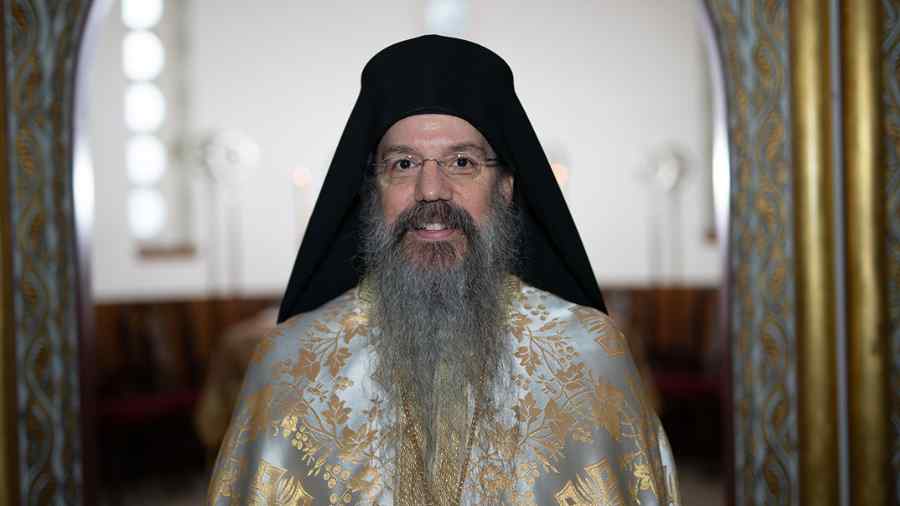
Maximos Constas is widely recognised as one of the most influential contemporary figures in Orthodox Christian theology and patristic studies. Known for his deep engagement with the writings of the early Church Fathers, his lived experience of monasticism, and his work as an academic and translator, he occupies a unique space where ancient Christian wisdom meets modern intellectual life. His scholarship is not confined to the past; rather, it actively speaks to present-day questions about meaning, spirituality, culture, and education.
Unlike many scholars whose work remains purely academic, Maximos Constas combines rigorous intellectual discipline with spiritual practice. This integration gives his writing and teaching a distinctive clarity and depth that resonates with theologians, students, clergy, and thoughtful readers alike. His journey from elite academic institutions to the monastic life of Mount Athos, and later back into public intellectual engagement, has shaped a voice that is both authoritative and deeply human.
Early Life and Intellectual Formation
Maximos Constas was born in the United States and raised in a cultural environment that encouraged intellectual curiosity and disciplined study. From an early age, he demonstrated a strong interest in history, philosophy, and religious thought. These interests gradually matured into a focused engagement with Christian theology, particularly the theological and spiritual traditions of Eastern Christianity.
His academic path led him toward the study of patristics, the field concerned with the writings and teachings of the early Church Fathers. This discipline demands not only linguistic skill and historical awareness but also philosophical sensitivity and theological precision. Constas’s early education laid the groundwork for what would become a lifelong commitment to understanding how early Christian thinkers addressed questions of God, humanity, creation, and salvation.
Academic Education and Scholarly Foundations
Doctoral Studies and Specialisation
Maximos Constas earned his doctorate in patristics and historical theology, specialising in the theological and exegetical traditions of early and medieval Christianity. His doctoral work required mastery of ancient languages, including Greek and Latin, as well as a deep familiarity with classical philosophy and biblical interpretation.
His research focused particularly on figures such as Maximus the Confessor, one of the most complex and influential theologians of the Byzantine era. Through this focus, Constas developed a scholarly style characterised by close textual reading, philosophical insight, and theological coherence. Rather than treating ancient texts as historical artefacts, he approached them as living sources of wisdom capable of addressing contemporary spiritual and intellectual concerns.
Teaching at Major Institutions
Before entering monastic life, Maximos Constas held teaching positions at leading academic institutions. Most notably, he taught at Harvard Divinity School, where he introduced students to patristic theology, Orthodox spirituality, and the broader Christian intellectual tradition. His teaching was widely respected for its depth, clarity, and ability to engage students from diverse religious and philosophical backgrounds.
During this period, Constas established himself as a scholar capable of bridging academic rigor with spiritual insight. His lectures and seminars were known for challenging students to think critically while remaining attentive to the existential and ethical dimensions of theological study.
The Turn to Monastic Life
Entering Mount Athos
In a decision that surprised many colleagues, Maximos Constas left his academic post to pursue monastic life on Mount Athos, the historic centre of Orthodox monasticism in Greece. There, he entered the Monastery of Simonopetra, one of the most spiritually and intellectually vibrant monastic communities on the Holy Mountain.
This period marked a profound transformation in his life. Monasticism demanded a radical reorientation of priorities, centred on prayer, humility, obedience, and communal living. Far from abandoning scholarship, however, Constas continued his intellectual work within the rhythm of monastic discipline. His experience on Mount Athos deepened his understanding of the spiritual context in which many patristic texts were originally written.
Impact on His Thought
Living as a monk gave Maximos Constas firsthand insight into the ascetical practices and spiritual aims that shaped early Christian theology. This experience allowed him to interpret patristic writings not merely as abstract theological systems, but as expressions of lived spiritual struggle and transformation.
His monastic years contributed significantly to the tone of his later work, which combines scholarly precision with spiritual sensitivity. Readers often note that his writing reflects an inner coherence between what is studied intellectually and what is practiced spiritually.
Return to Public Intellectual Life
Academic Leadership and Teaching
After several years on Mount Athos, Maximos Constas returned to public academic life, bringing with him the depth and perspective gained through monastic experience. He later became a distinguished professor of the humanities at the University of Austin, where he contributes to a curriculum rooted in classical education and intellectual tradition.
In this role, Constas engages students not only with theological texts but also with broader questions of culture, ethics, and human purpose. His teaching reflects a commitment to education as the formation of the whole person, not merely the transmission of information.
A Voice in Contemporary Cultural Conversations
Beyond the classroom, Maximos Constas has emerged as an important voice in discussions about the role of tradition in modern society. He has spoken and written about the importance of classical education, the dangers of intellectual fragmentation, and the need for a renewed engagement with foundational texts.
His perspective is neither nostalgic nor reactionary. Instead, he argues that ancient wisdom traditions offer resources for critical thinking, moral discernment, and spiritual depth that remain relevant in the contemporary world.
Major Theological Contributions
Patristic Scholarship and Translation
One of the most significant contributions of Maximos Constas lies in his work as a translator and interpreter of patristic texts. Translating ancient theological works requires more than linguistic competence; it demands an understanding of philosophical nuance, theological context, and spiritual intent.
Constas has produced respected translations and commentaries that make complex Byzantine theological texts accessible to modern readers without sacrificing their depth. His work on Maximus the Confessor, in particular, has been praised for its clarity and faithfulness to the original thought.
Theology as a Living Tradition
A defining feature of Constas’s theology is his insistence that tradition is not static. For him, the writings of the Church Fathers are not museum pieces but living witnesses that continue to speak to new generations.
He emphasises that true engagement with tradition involves both fidelity and creativity. This approach challenges readers to take ancient texts seriously while allowing them to inform contemporary questions about identity, freedom, suffering, and hope.
Scripture, Liturgy, and Spiritual Life
Another key theme in Maximos Constas’s work is the integration of Scripture, liturgy, and spiritual practice. He highlights how early Christian theology emerged from the lived experience of worship and prayer, rather than from abstract speculation alone.
This insight has implications for modern religious life, encouraging a holistic approach in which belief, practice, and community are deeply interconnected.
Influence on Students and Readers
Teaching Style and Pedagogical Vision
Students of Maximos Constas often describe his teaching as transformative. He challenges them to read carefully, think deeply, and engage respectfully with texts that may initially feel distant or difficult.
His pedagogical vision is grounded in the belief that education should cultivate wisdom rather than mere technical skill. By introducing students to the depth of the Christian intellectual tradition, he invites them into a larger conversation about truth, beauty, and goodness.
Broad Readership and Lasting Impact
Beyond academia, Constas’s books and lectures reach a wide audience that includes clergy, theologians, and thoughtful lay readers. His ability to communicate complex ideas in clear, accessible language has helped bring patristic theology into dialogue with contemporary concerns.
For many readers, his work provides a bridge between faith and intellect, offering a model of how serious scholarship can coexist with spiritual commitment.
(FAQs)
Who is Maximos Constas best known for studying?
He is especially known for his scholarship on Maximus the Confessor and other early Christian theologians within the Byzantine tradition.
Did Maximos Constas live as a monk?
Yes, he lived for several years as a monk at the Monastery of Simonopetra on Mount Athos, an experience that deeply shaped his theology.
What makes Maximos Constas’s work unique?
His work uniquely combines academic rigor, spiritual practice, and cultural engagement, treating theology as both intellectual and lived reality.
Is Maximos Constas only relevant to Orthodox Christians?
No, his scholarship is widely read across Christian traditions and by secular readers interested in philosophy, history, and classical education.
Does Maximos Constas write for non-specialists?
Yes, while his work is academically rigorous, much of his writing is accessible to educated general readers seeking depth without technical overload.
Conclusion
Maximos Constas stands as a compelling example of how ancient Christian wisdom can speak meaningfully to the modern world. Through his journey as a scholar, monk, teacher, and translator, he has demonstrated that tradition and innovation are not opposing forces but complementary dimensions of intellectual and spiritual life.
His work reminds readers that theology, at its best, is not merely about ideas but about transformation. By engaging deeply with the writings of the past and the challenges of the present, Maximos Constas continues to offer a vision of faith and thought that is both grounded and expansive, rooted in history yet open to the future.