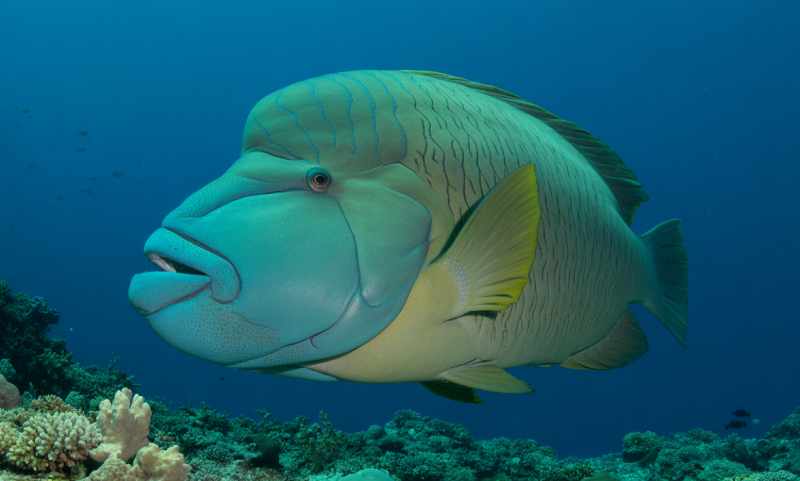
The Napoleon Wrasse is one of the most extraordinary fish found in the world’s oceans. Instantly recognizable by its massive size, thick lips, and distinctive hump on its forehead, this species commands attention wherever it swims. Often described as gentle, intelligent, and surprisingly curious, the napoleon wrasse has fascinated divers, marine biologists, and ocean lovers for decades.
What Is a Napoleon Wrasse?
The napoleon wrasse, also known as the humphead wrasse, is one of the largest reef-dwelling fish on Earth. Native to warm tropical waters, it belongs to the wrasse family and is famous for its sheer size and unique facial structure.
Adult napoleon wrasses can grow over six feet long and weigh hundreds of pounds, making them true giants among reef fish. Despite their intimidating size, they are generally calm and non-aggressive toward humans. Divers often report that these fish approach slowly, observe closely, and then glide away with an almost thoughtful demeanor.
The name “napoleon” comes from the prominent hump on the fish’s forehead, which many believe resembles the bicorne hat associated with Napoleon Bonaparte.
Physical Characteristics of the Napoleon Wrasse
Size and Shape
The napoleon wrasse is built like a heavyweight. Its thick body, large head, and powerful tail allow it to move effortlessly through strong reef currents. Fully grown males are typically larger than females and have more pronounced forehead humps.
Coloration
Color patterns vary by age and gender. Juveniles usually display pale green bodies with darker markings, which help them blend into reef environments. Adult females often show greenish-blue hues, while mature males develop deeper blues, greens, and sometimes hints of purple.
Distinctive Features
One of the most noticeable features of the napoleon wrasse is its thick, fleshy lips. These lips protect the fish while feeding on hard-shelled prey. Combined with strong jaws and specialized teeth, this adaptation allows the fish to crush shells with ease.
Habitat and Geographic Range
Where Napoleon Wrasse Live
The napoleon wrasse inhabits coral reefs across the Indo-Pacific region. Its range stretches from the Red Sea and eastern Africa all the way to the central Pacific islands. These fish prefer healthy reef systems with plenty of coral cover and food availability.
Depth Preferences
Juvenile napoleon wrasses usually stay in shallow reef flats and lagoons, where they find protection among branching corals. Adults tend to occupy deeper reef slopes, channels, and drop-offs, sometimes venturing to depths of over 300 feet.
This shift in habitat as they age helps reduce competition for food and provides safer breeding grounds.
Diet and Feeding Behavior
What Does a Napoleon Wrasse Eat?
The napoleon wrasse is a carnivorous predator with a varied diet. It feeds on hard-shelled animals that many other reef fish cannot eat, including clams, snails, crustaceans, sea urchins, and starfish.
One of its most important ecological roles is feeding on crown-of-thorns starfish, a species known for destroying coral reefs when its population explodes. By preying on these starfish, the napoleon wrasse helps protect coral ecosystems from severe damage.
Hunting Techniques
Rather than chasing prey aggressively, the napoleon wrasse uses slow, deliberate movements. It relies on its strength rather than speed, crushing shells with powerful jaws. This efficient feeding style allows it to consume prey that would otherwise be untouched, contributing to reef balance.
Intelligence and Behavior
Interaction With Humans
The napoleon wrasse is often described as one of the most intelligent reef fish. Divers frequently observe individuals recognizing regular visitors and showing curiosity rather than fear. Some even follow divers for short distances, maintaining eye contact in a way that feels surprisingly personal.
Social Structure
These fish are usually solitary but may be seen in pairs or small groups, especially during breeding periods. They are territorial to some extent, with dominant males controlling larger areas of reef.
Sleeping Habits
At night, napoleon wrasses often rest in reef crevices or under coral ledges. They may change color slightly while resting, which helps camouflage them from predators.
Reproduction and Life Cycle
Gender Change
One of the most fascinating aspects of the napoleon wrasse is its reproductive biology. This species is protogynous, meaning individuals are born female and some later change into males as they mature.
This transition typically occurs when a dominant male is absent from an area. The largest female may transform into a male, ensuring continued reproduction within the population.
Breeding Behavior
Spawning usually occurs at specific times of the year and often around full moons. Groups gather at designated spawning sites, releasing eggs and sperm into open water. Fertilized eggs drift with currents until they hatch, after which larvae settle into shallow reef areas.
Growth Rate and Lifespan
Napoleon wrasses grow slowly and take many years to reach sexual maturity. They are also long-lived, with some individuals believed to survive for several decades. This slow growth makes populations especially vulnerable to overfishing.
Ecological Importance of the Napoleon Wrasse
Reef Health and Balance
The napoleon wrasse plays a key role in coral reef ecosystems. By feeding on organisms that can damage coral, it helps maintain reef structure and biodiversity. Its absence can lead to imbalances that negatively affect many other marine species.
Indicator of Reef Quality
Because this fish depends on healthy reefs, its presence is often seen as a sign of a thriving ecosystem. Declining napoleon wrasse populations can signal broader environmental problems, including coral degradation and overfishing.
Threats Facing the Napoleon Wrasse
Overfishing
The biggest threat to the napoleon wrasse is overfishing, particularly for the live reef fish trade. In some regions, the fish is considered a luxury seafood item, leading to intense fishing pressure.
Illegal and Destructive Fishing Practices
Unsustainable fishing methods, such as cyanide fishing, not only harm napoleon wrasses but also damage coral reefs and kill other marine life. These practices have had devastating effects in parts of Southeast Asia.
Habitat Loss
Climate change, coral bleaching, and pollution are reducing the availability of healthy reef habitats. As reefs decline, napoleon wrasses lose feeding grounds and safe breeding areas.
Conservation Status and Protection Efforts
Endangered Classification
The napoleon wrasse is classified as endangered due to rapid population declines across much of its range. International trade is regulated, and many countries have implemented fishing restrictions or bans.
Marine Protected Areas
Marine reserves and protected reef zones offer some hope for recovery. In areas where fishing is restricted, napoleon wrasse populations have shown signs of stabilization and slow growth.
Role of Education and Ecotourism
Responsible diving tourism can help protect the species by providing economic incentives to keep fish alive rather than harvested. Education programs also play a vital role in raising awareness about the importance of reef conservation.
Napoleon Wrasse in Culture and Popular Media
In many coastal cultures, the napoleon wrasse is seen as a symbol of reef abundance and strength. Its impressive size and calm nature have made it a favorite subject in documentaries and underwater photography.
Aquariums occasionally display juvenile napoleon wrasses, though keeping adults in captivity is extremely challenging due to their size and specialized needs.
How Humans Can Help Protect the Napoleon Wrasse
Protecting the napoleon wrasse requires collective action. Supporting sustainable seafood choices, respecting marine protected areas, and avoiding products linked to destructive fishing all make a difference.
Divers and snorkelers can help by maintaining safe distances, avoiding touching marine life, and supporting conservation-focused tour operators. Small actions, when multiplied, can have a meaningful impact on the future of this species.
FAQs About Napoleon Wrasse
Is the napoleon wrasse dangerous to humans?
No, the napoleon wrasse is not dangerous to humans. It is generally calm and curious, and incidents involving aggression are extremely rare.
Why is the napoleon wrasse endangered?
The species is endangered mainly due to overfishing, illegal fishing practices, and habitat loss caused by coral reef degradation.
Can you keep a napoleon wrasse as a pet?
Keeping a napoleon wrasse as a pet is not practical or ethical due to its massive size, long lifespan, and conservation status.
How big can a napoleon wrasse grow?
A fully grown napoleon wrasse can exceed six feet in length and weigh several hundred pounds.
What makes the napoleon wrasse important to coral reefs?
It helps control populations of reef-damaging species, such as crown-of-thorns starfish, contributing to overall reef health.
Conclusion
The napoleon wrasse is more than just a visually stunning fish; it is a cornerstone of coral reef ecosystems. Its intelligence, unique biology, and ecological importance make it one of the most remarkable marine species on the planet. Yet, despite its strength and size, it remains vulnerable to human activity.
Protecting the napoleon wrasse means protecting coral reefs themselves. Through responsible fishing practices, habitat conservation, and greater awareness, there is still hope that future generations will continue to encounter this gentle giant gliding through vibrant reef waters.