In today’s evolving corporate landscape, workplace cafeterias are no longer just places to grab a quick lunch. They have become strategic assets that influence employee satisfaction, company culture, productivity, and even talent retention. Across the United States, employers are rethinking how food service fits into the work environment, moving beyond outdated cafeteria lines toward flexible, technology-driven, and experience-focused dining spaces.
The Evolution of Workplace Dining in America
For decades, company cafeterias followed a predictable format. Employees lined up with trays, chose from a limited menu, paid at a register, and returned to their desks. The focus was functional rather than experiential. Meals were standardized, speed mattered more than variety, and ambiance was rarely a priority.
That model no longer reflects how people want to work or eat. Today’s workforce expects flexibility, personalization, and efficiency in every part of their day. As a result, workplace cafeterias have evolved from basic lunchrooms into multi-purpose hubs that combine dining, collaboration, and relaxation.
This evolution has been accelerated by three major forces:
- The rise of hybrid and flexible work schedules
- Increasing emphasis on employee wellness
- Technological innovation in food service
Employers now view dining not as an operational expense, but as an investment in employee engagement.
Why Workplace Cafeterias Matter More Than Ever
Food is deeply connected to morale and productivity. When employees have convenient access to quality meals, they spend less time commuting for lunch, reduce stress, and often make healthier choices. These seemingly small improvements can significantly influence daily performance.
Modern workplace cafeterias also encourage organic interaction. Informal conversations over lunch can spark collaboration between departments that might otherwise rarely connect. Many companies have found that thoughtfully designed dining spaces naturally support teamwork without formal meetings.
Beyond productivity, food offerings influence employer branding. In competitive industries such as technology, finance, and healthcare, strong dining programs can differentiate one employer from another. A welcoming, well-run cafeteria signals that the company values comfort and employee experience.
Technology Is Redefining the Dining Experience
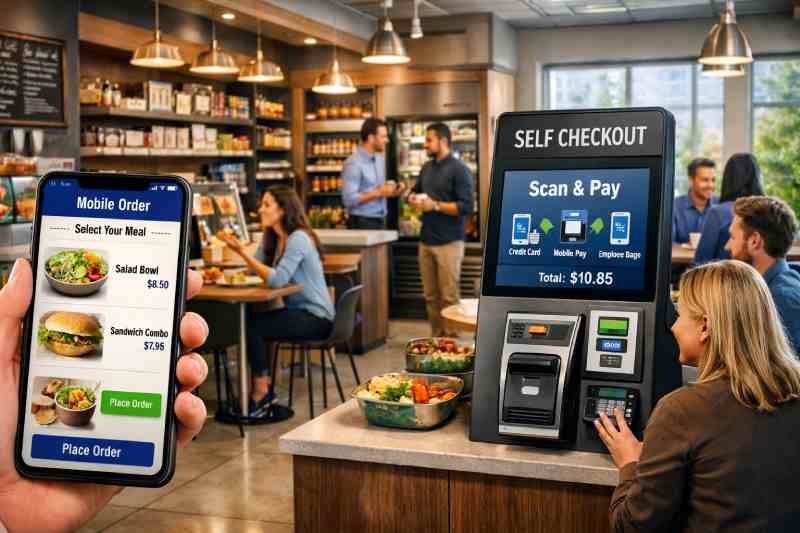
Technology has dramatically changed how employees interact with food at work. Instead of waiting in long lines, workers can now place orders through mobile apps, schedule pick-up times, or scan items for self-checkout.
Mobile Ordering and Pre-Ordering Systems
Mobile ordering has become one of the most visible upgrades in workplace cafeterias. Employees can browse menus, customize meals, and pay digitally before ever stepping into the dining area. This system reduces congestion during peak hours and gives employees more control over their time.
For employers, digital ordering tools also provide valuable data. Food service teams can track popular items, adjust portion sizes, reduce waste, and plan menus based on actual demand rather than guesswork.
Contactless and Frictionless Payments
Cashless systems, badge scanning, and QR-based payments are now common. These frictionless payment methods make the lunch process quicker and more hygienic, while simplifying reimbursement or subsidy tracking for employers.
In many corporate offices, employees no longer need to carry cash or even a wallet. Their company ID badge or mobile phone handles everything.
Micro-Markets and Self-Service Models
One of the fastest-growing trends involves replacing traditional cafeteria lines with micro-markets. These self-service spaces offer fresh meals, snacks, and beverages displayed in refrigerated cases and shelves. Employees select items and check out at kiosks without staff assistance.
Micro-markets operate throughout the day, making them ideal for flexible work schedules. They are especially effective in offices where not everyone works the same hours.
Designing Spaces That Support Culture
Today’s workplace cafeterias are intentionally designed as gathering spaces. Lighting, furniture, and layout receive as much attention as menu planning. Companies are investing in comfortable seating, natural light, and versatile layouts that can support both quiet lunches and group events.
Many cafeterias now double as:
- Casual meeting spaces
- Team celebration venues
- After-hours social areas
- Informal collaboration hubs
The design philosophy emphasizes openness and community. Instead of isolating food areas in basements or back corners, employers place dining spaces in central, highly visible locations.
This integration reinforces the idea that food is part of the workplace experience rather than an afterthought.
Health and Wellness as a Core Priority
Nutrition has become a central concern for employers seeking to support long-term employee health. Modern workplace cafeterias often feature:
- Fresh produce and salad stations
- Plant-based and vegetarian options
- Clear calorie labeling
- Allergen-friendly menus
- Reduced-sodium and whole-grain choices
Providing healthier food choices is not simply a trend. Studies consistently show that access to balanced meals improves concentration and energy levels throughout the day.
Some companies even collaborate with dietitians to design menus aligned with wellness goals. Others incorporate hydration stations, smoothie bars, or locally sourced ingredients to support both health and sustainability initiatives.
Adapting to Hybrid Work Environments
The shift toward hybrid work has reshaped how often employees visit the office. On some days, attendance may be significantly lower than before the pandemic. This variability challenges traditional food service models.
To remain efficient, workplace cafeterias now use flexible staffing and scalable food preparation systems. Instead of preparing large volumes of food daily, many kitchens rely on smaller batch cooking and real-time demand tracking.
Some organizations offer meal subsidies for employees who commute to the office on designated collaboration days. Others host themed food events to encourage in-office attendance. In this way, dining becomes part of a broader return-to-office strategy.
Supporting Sustainability Goals
Sustainability is another major focus area. Companies are under pressure to reduce environmental impact, and food operations play a meaningful role.
Modern workplace cafeterias often prioritize:
- Composting programs
- Reusable or biodegradable packaging
- Locally sourced ingredients
- Energy-efficient kitchen equipment
- Food waste tracking systems
Reducing waste not only lowers costs but also aligns with corporate environmental commitments. Many employees appreciate visible sustainability efforts, which reinforce a sense of shared responsibility.
Financial Considerations for Employers
Operating food services requires careful budgeting. However, organizations increasingly recognize that the indirect benefits often outweigh the direct costs.
Workplace cafeterias can reduce employee turnover by improving satisfaction. They can also decrease time spent leaving the office for meals, effectively increasing available work hours without extending the workday.
Employers use different financial models:
- Fully subsidized meals
- Partial meal allowances
- Pay-per-item retail models
- Third-party dining partnerships
The right model depends on company size, industry, and workforce demographics. Smaller offices may rely on micro-markets, while larger campuses maintain full-service kitchens.
The Role of Local Partnerships
To keep menus dynamic, many companies partner with local restaurants or caterers. Rotating chefs and pop-up food events introduce variety without requiring permanent kitchen expansions.
These partnerships benefit both sides. Employers gain access to diverse cuisines and culinary creativity. Local businesses gain steady revenue streams and exposure to new customers.
Employees often appreciate discovering new food options without leaving the office.
Challenges Facing Workplace Food Programs
Despite their advantages, workplace cafeterias face ongoing challenges.
Fluctuating attendance can complicate inventory planning. Rising food costs may strain budgets. Additionally, companies must ensure compliance with food safety regulations and accommodate diverse dietary preferences.
Balancing quality with affordability requires constant adjustment. Successful dining programs regularly gather employee feedback and adapt accordingly.
Measuring Success
To evaluate performance, organizations track several indicators:
- Employee satisfaction surveys
- Participation rates
- Food waste levels
- Cost per meal
- Menu popularity
Data-driven decision-making helps refine offerings over time. The most successful programs treat dining as an evolving service rather than a static benefit.
(FAQs)
What are workplace cafeterias designed to achieve?
Workplace cafeterias are designed to provide convenient, nutritious meals while fostering collaboration, improving morale, and supporting company culture.
Are workplace cafeterias expensive for employers?
Costs vary widely depending on size and service model. Many companies offset expenses through subsidies, partnerships, or partial payment systems.
How do workplace cafeterias support hybrid work?
Flexible food preparation, micro-markets, and special in-office meal events help align dining services with fluctuating attendance.
Do workplace cafeterias improve productivity?
Access to convenient meals reduces time spent leaving the office and can improve focus and energy levels throughout the day.
What trends are shaping workplace cafeterias in the United States?
Key trends include mobile ordering, self-service micro-markets, wellness-focused menus, sustainability initiatives, and tech-enabled payment systems.
Conclusion
Workplace cafeterias have transformed from simple meal stations into strategic components of the modern American office. By integrating technology, wellness, sustainability, and thoughtful design, employers are reshaping how employees experience food at work.
As hybrid schedules and evolving expectations continue to redefine corporate culture, dining programs will remain a visible symbol of how organizations value their people. The future of workplace cafeterias lies not just in feeding employees, but in supporting productivity, community, and long-term workplace satisfaction.